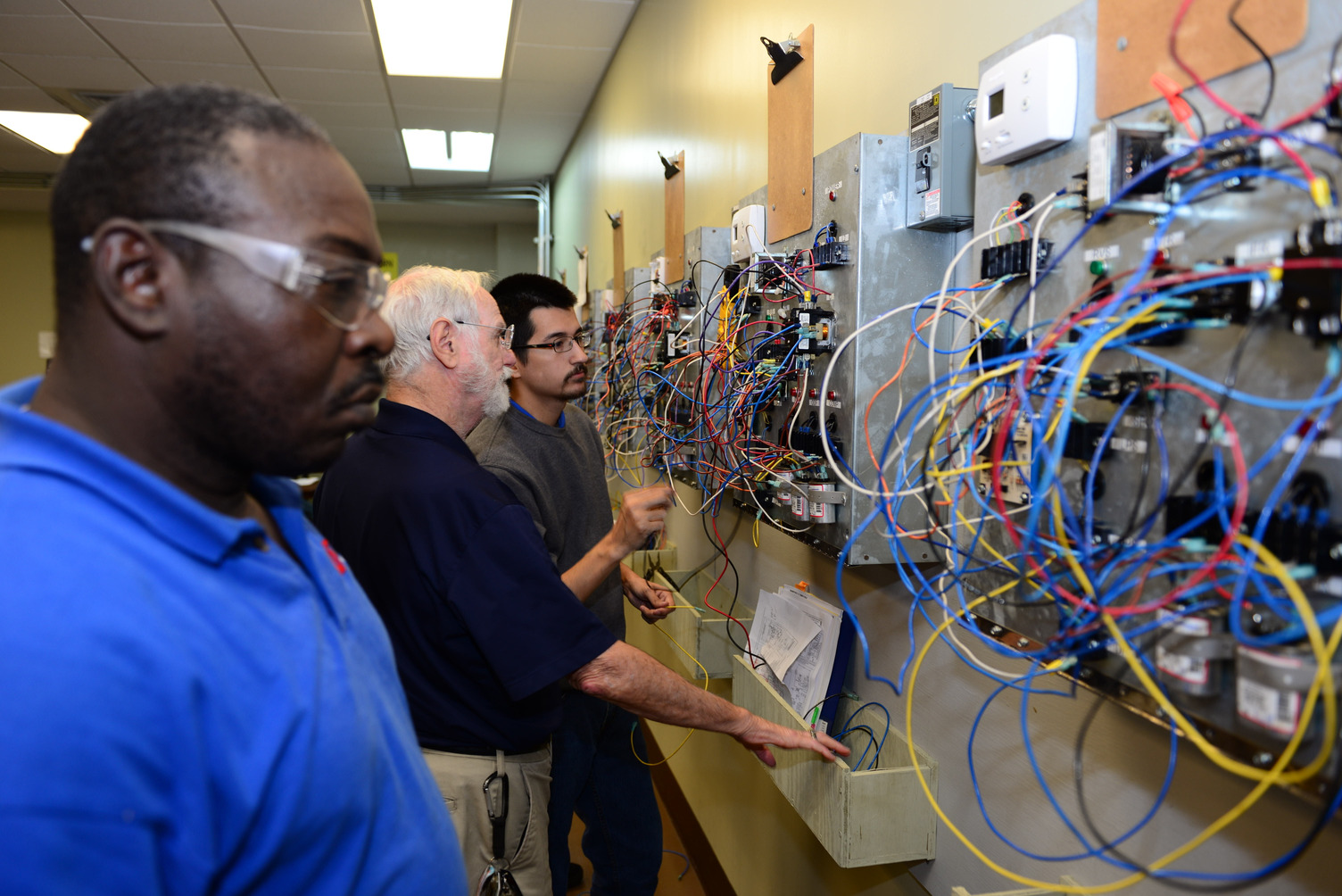
TWS is a Great Training Option for Everyone
Learn more about how we can prepare you to advance your career.
Ground fault circuit interrupters and arc fault circuit interrupters serve different but equally important functions in modern electrical safety.
GFCIs reduce the risk of electric shock by interrupting power when electricity flows outside its intended path, while AFCIs reduce fire risk by detecting dangerous arcing conditions within wiring.
Since the introduction into the National Electrical Code (NEC) in the 1970s, GFCIs have helped reduce household electrocutions by roughly fifty percent, highlighting their impact on everyday safety. Both devices are required in specific situations under electrical codes and are commonly encountered in residential and light commercial work.
Knowing how GFCI outlets, GFCI breakers, and AFCI outlets function — and why they are used — is necessary for installing systems correctly, recognizing unsafe conditions, and maintaining code compliance. This level of understanding reflects the foundational knowledge expected in real-world electrical work.
What Is a GFCI Outlet?
A GFCI outlet is designed to reduce the risk of electrical shock by monitoring the flow of current through a circuit. Under normal conditions, electricity travels from the hot conductor to the load and returns on the neutral conductor in equal amounts. When that balance is disrupted, it signals that current may be flowing somewhere it should not.
Get Started on the Path to a New Career
Fill out our form to learn how we can help you change your life.
When electricity begins traveling along an unintended path, such as through water, damaged insulation, or a person, the GFCI reacts almost instantly. The device interrupts power in a fraction of a second, fast enough to reduce the likelihood of serious injury or death. This rapid response is what makes GFCI protection so effective in everyday environments.
GFCI protection is most commonly used in locations where moisture increases the risk of shock. These areas include:
- Kitchens
- Bathrooms
- Garages
- Basements
- Crawl spaces
- Outdoor locations
Federal safety guidance and electrical codes require GFCI protection in these spaces because water and conductive surfaces increase the chances of current leaving its intended path.
How a GFCI Works
A GFCI continuously compares the amount of current leaving the device on the hot conductor with the amount returning on the neutral conductor. Under normal conditions, those values are equal. Even a difference as small as a few milliamps indicates a problem.
When an imbalance is detected, the GFCI trips and shuts off power to the circuit. This happens quickly enough that a person may feel only a brief sensation, if anything at all. The goal is not to prevent all contact with electricity, but to limit exposure before serious harm can occur.
Built-in test and reset buttons allow the device to be checked regularly. Pressing the test button intentionally creates a small imbalance, confirming that the outlet can detect faults and shut off power correctly. Regular testing is recommended to ensure the device remains functional over time.
GFCI Outlet vs. GFCI Breaker: How to Choose the Right Protection
Choosing between a GFCI outlet and a GFCI breaker depends on how the circuit is designed, how many locations require protection, and how the system will be accessed for maintenance or troubleshooting. Both options provide the same type of ground-fault protection, but they do so at different points in the electrical system.
A GFCI outlet is typically used when protection is needed at a single location. Common examples include a receptacle near a sink, a bathroom vanity outlet, or an individual outdoor receptacle. Because the protection is built directly into the outlet, only that device and any downstream outlets connected to its load terminals are affected.
GFCI outlets offer practical advantages such as:
- Resetting protection directly at the receptacle
- Simplified troubleshooting at individual outlets
- Reduced need to access the electrical panel
A GFCI breaker is installed in the electrical panel and provides ground-fault protection for every outlet and device on the circuit. This approach is often preferred when multiple receptacles on the same circuit require protection, such as in garages, outdoor circuits, or unfinished basements.
Breaker-level protection may be the better choice when:
- Multiple outlets share the same circuit
- Resetting devices individually would be inconvenient
- The layout makes outlet replacement difficult
Physical constraints also play a role. GFCI receptacles are larger than standard outlets and may not fit safely in shallow or crowded electrical boxes. In some cases, electrical codes or inspection requirements specify that GFCI protection must be provided at the breaker rather than at individual receptacles.
What Is an AFCI Outlet?
An AFCI outlet is designed to reduce the risk of electrical fires caused by dangerous arcing within wiring or electrical connections. Unlike ground faults, arc faults do not necessarily involve current leaving the circuit. Instead, they involve unstable electrical paths that generate heat over time.
Arc faults can develop from several common conditions, including:
- Loose terminal connections
- Damaged conductors
- Worn or deteriorating insulation
These issues often exist behind walls, inside junction boxes, or within devices, where they are not easily visible. Because arcing can occur without immediately tripping a standard breaker, it poses a serious fire risk in residential and light commercial buildings.
Unlike GFCIs, which focus on current imbalance and shock prevention, AFCIs are designed to identify abnormal electrical patterns associated with arcing and overheating.
How an AFCI Works
AFCIs analyze the electrical waveform flowing through a circuit. Normal electrical loads create predictable patterns, even when devices like switches or motors cause brief, harmless arcs. Dangerous arcing produces distinct, irregular signatures that indicate excessive heat and instability.
When an AFCI detects these hazardous patterns, it interrupts power before temperatures can rise to the point where insulation ignites or surrounding materials catch fire. This early intervention is critical because electrical fires often begin slowly and remain hidden until significant damage has already occurred.
Modern AFCIs are designed to ignore normal operating conditions while remaining sensitive to unsafe ones. This balance reduces nuisance tripping while still providing meaningful fire protection in everyday use.
AFCI vs. GFCI: What’s the Difference?
GFCI and AFCI protection address different electrical hazards, and neither replaces the other. GFCIs are designed to reduce shock risk, while AFCIs are designed to reduce fire risk caused by arcing faults.
GFCIs respond to current leaking outside the intended circuit path. This commonly occurs when electricity contacts water, conductive surfaces, or a person. The primary goal is to interrupt power quickly enough to prevent serious injury.
AFCIs respond to dangerous arcing conditions within the wiring itself. These faults are often caused by loose connections, damaged conductors, or aging materials. In many cases, no current imbalance is present, so a GFCI would not detect the problem.
A circuit can appear to function normally while still producing arc faults. Lights may turn on and outlets may deliver power, even as heat builds up inside walls or devices. This is why AFCI protection is critical in living spaces where wiring damage can go unnoticed.
In many modern installations, both AFCI and GFCI protection are required on the same circuit. Each device addresses a separate hazard, and together they provide a more complete safety system.
In many modern installations, circuits may require both AFCI and GFCI protection. This dual requirement reflects the fact that shock hazards and fire hazards are separate risks that must be addressed independently.
Why This Matters for Electrical Careers
Early exposure to safety systems shapes how electricians approach every installation, inspection, and repair. Understanding why protective devices are required is just as important as knowing how to install them.
Electricians are expected to recognize when GFCI or AFCI protection is required and to understand how those devices should function once installed. This knowledge supports safe work practices and helps prevent costly mistakes or failed inspections.
Strong fundamentals also support long-term growth in the field. From troubleshooting nuisance trips to diagnosing hidden wiring issues, electricians rely on their understanding of electrical safety devices throughout their careers. These skills become increasingly important as systems grow more complex.
Taking the Next Step in Your Electrical Career
Electrical safety devices are part of everyday work in residential and light commercial environments. Structured training helps turn concepts like GFCI and AFCI protection into practical skills used on the job. Electrical training programs, like those provided by The Refrigeration School, Inc. (RSI), can help you gain a better understanding how these systems work is often the first step toward deciding whether the electrical trade is the right fit.
Ready to explore how hands-on electrical training could look for you? Reach out to RSI today to discuss your career goals.