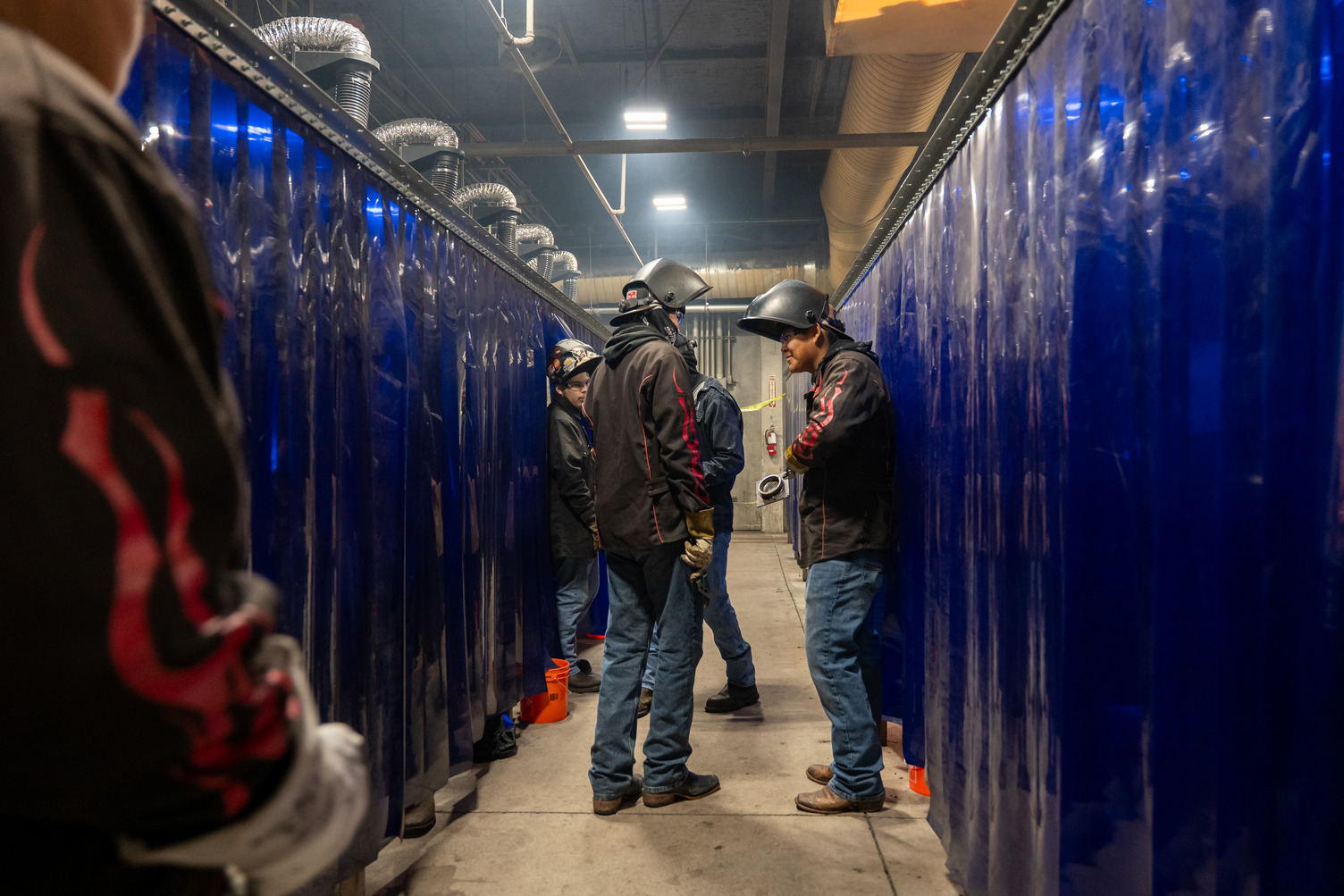
RSI is a Great Training Option for Everyone
Learn more about how we can prepare you to advance your career.
You graduated. Or maybe you are about to. Either way, the question has already started: “So, what are you going to do?”
And the honest answer for a lot of people is: “I do not know yet.”
That is fine, but here is what tends to happen next: You take whatever job is hiring, because rent exists and so does your phone bill. You tell yourself it is temporary. Then six months turns into a year, the pay barely moves, and you are still Googling career options after high school at 1 a.m.
That cycle is common, but it is not inevitable. When you compare the most common entry-level jobs with a skilled trades career path, the difference in where each one leads is hard to ignore.
The Jobs Most People Default To
Retail, food service, and warehouse work often show up first when you search “jobs near me,” and are often hiring. That matters when you need money now.
Get Started on the Path to a New Career
Fill out our form to learn how we can help you change your life.
But getting hired fast and building a career are two different things.
What the Pay Actually Looks Like
Many of these positions start at or near the federal minimum wage of $7.25 per hour. According to the BLS, 82,000 workers earned exactly the federal minimum in 2024, and about 760,000 less than that. Some states and cities set higher minimums, but for workers without prior skills or experience, minimum wage is often the reality.
Even at median pay levels, these roles sit well below the national average. According to BLS Occupational Employment and Wage Statistics data, here is what workers in common entry-level fields earned as of May 2024:
| Occupation | Median Annual Wage (May 2024) |
|---|---|
| Food and beverage serving workers | $31,030 |
| Food preparation workers | $34,220 |
| Retail salespersons | $34,570 |
| Hand laborers and material movers | $37,680 |
For context, the median annual wage across all occupations in the U.S. was $49,500 in May 2024, according to the BLS. Every job on that list falls $12,000 to $18,000 short of that number.
Where These Jobs Tend to Stall
Pay aside, the bigger issue is what happens after you have been in the role for a while:
- Skills transfer within the field, but not far beyond it: If you learn a POS system at one restaurant, you can use one at another. If you get forklift-certified at a warehouse, that carries over to the next warehouse. These jobs can be solid stepping stones within their own industries. But moving into a higher-paying career field usually means starting fresh with new training or education.
- Moving up is slow and competitive: Becoming a shift lead or assistant manager can take years, and even then, first-line supervisors of retail sales workers earned a median of $52,350 in May 2024,, which is only modestly above the all-occupations median.
- Some of these fields are shrinking: The BLS projects that food preparation worker employment will actually decline 3% from 2024 to 2034.
These jobs are not dead-ends. They build work ethic, put money in your pocket and help you figure out what you actually want to do. But if the plan is to grow your income and your options over time, these roles alone probably will not get you there.
What a Skilled Trades Career Path Actually Looks Like
A skilled trades career path is also an entry-level option.
Effective training can help you learn a specific, technical skill set that builds on itself. And unlike learning a new POS system every time you switch jobs, the skills you pick up in a trade follow you everywhere.
HVAC/refrigeration, electrical work and welding each lead to careers where what you learn early directly affects what you earn later. That is a fundamentally different setup than most entry-level work.
How Skilled Trades Wages Stack Up
According to May 2024 BLS data, median annual wages for trades like welding ($51,000), HVAC/R ($59,810) and electrical work ($62,350) all come in above the national all-occupations median of $49,500.
But the starting wage is only part of the story. Skilled trades offer room for specialization, industry-recognized certifications, leadership roles and business ownership. Each of those steps tends to come with a real pay increase. The BLS reports that the highest 10% of HVAC technicians earned more than $91,020 and the top 10% of electricians earned more than $106,030 in May 2024.
In most common entry-level fields, earning more usually means working more hours. In the trades, earning more usually means knowing more.
The Demand Is Real
This is not a situation where the pay looks good on paper but nobody is actually hiring. According to the BLS Occupational Outlook Handbook, projected employment growth from 2024 to 2034 for skilled trades outpaces many common entry-level fields:
- Electricians: 9% growth, with about 81,000 openings projected per year
- HVAC/R mechanics and installers: 8% growth, with about 40,100 openings projected per year
- Welders, Cutters, Solderers, and Brazers: 2% growth
A big part of that demand comes from experienced tradespeople retiring. These openings are not a one-time spike. They are expected to be consistent, year after year, for the next decade.
Skills That Actually Go Somewhere
Picture two people, both 20 years old. One has spent two years in retail. The other spent seven months in trade training and has been working as an HVAC technician for about a year.
The retail worker may have customer service skills, time management, and the ability to handle difficult people. Useful stuff. But none of it unlocks a higher-paying role without additional training.
The HVAC technician can diagnose a refrigeration system, run electrical circuits and read schematics. Those abilities go with them to the next job, the next city, the next employer. And every certification they pick up along the way makes them more valuable.
What Trade Training Builds
Skilled trades training develops specific, technical skills that are transferable across employers, industries and locations. A welder trained on structural and pipe techniques can work in construction, manufacturing or energy. An electrician who knows residential and commercial wiring has options in nearly every market in the country.
Many trade programs also prepare students to earn industry-recognized certifications. For example, The Refrigeration School, Inc. (RSI) HVAC/Refrigeration program includes preparation for EPA certification, which is required by federal law for anyone handling refrigerants, according to the U.S. Environmental Protection Agency.
Each certification is another line on your resume that tells an employer you are qualified, not just available.
Moving Up: Ceiling vs. Ladder
This is the part that matters most if you are thinking past your next paycheck.
The Entry-Level Ceiling
In retail, food service or warehouse work, the path forward usually looks like this: shift lead, maybe assistant manager, maybe general manager. That can take years, often involves unpredictable hours and does not always come with a pay increase that reflects the added stress.
For a lot of people in these roles, the ceiling comes into view pretty quickly.
The Trades Ladder
Skilled trades have a more defined progression, and it tends to move faster:
- Entry-level technician right after completing training
- Mid-level roles with more responsibility, specialization and pay as experience builds
- Senior technician, foreman or project lead positions within several years
- Business ownership for those who want to run their own operation
The BLS Occupational Outlook Handbook entry on electricians notes that apprentices earn less than fully trained electricians, but their pay increases as they learn to do more. That same model applies across HVAC and welding. The more you know, the more you are worth.
And unlike most entry-level career paths, starting your own business is a real possibility in the trades. With the right experience and licensing, many HVAC technicians, electricians and welders go independent, which opens up an entirely different income ceiling.
What About College? Alternatives to College After High School
Nobody is saying college is a mistake. For some careers, it is the only way in. But it is also not the guaranteed path to financial stability that it used to be, and it is worth looking at the numbers honestly.
According to data from the Education Data Initiative:
- The average student who borrowed to pursue a bachelor’s degree in 2025 took out approximately $35,639 in education loans.
- For students at public universities, that figure was about $31,960.
That is a lot to take on at 18, especially if you are not sure what you want to study or whether the degree will lead to a specific career.
Trade training is a different equation.
According to BestColleges, the average annual cost of trade school was $15,070 for the 2022-23 school year, based on tuition and fees data from the Integrated Postsecondary Education Data System (IPEDS).
Many programs can be completed in under a year, which keeps the total cost well below what most students pay for a four-year degree. RSI’s programs range from 7 to 15 months, meaning students can get into the workforce and start earning sooner while typically carrying far less debt.
For anyone exploring alternatives to college after high school, trade school is not a consolation prize. It is a shorter, more focused route into a career with real demand. The skilled trades career path gives graduates a foundation they can build on for decades through specialization, certifications, leadership or starting a business.
Getting Started With Trade Training at RSI
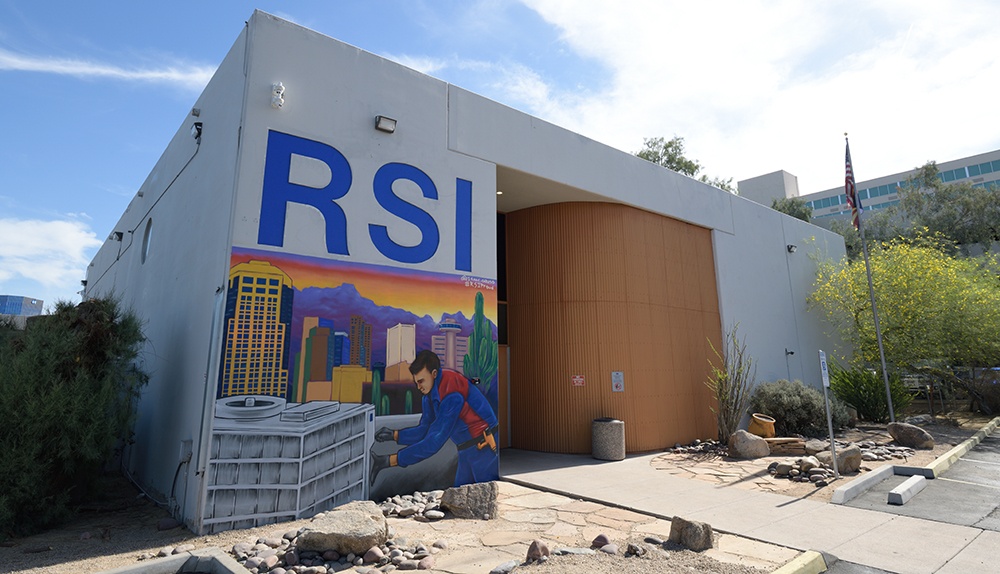
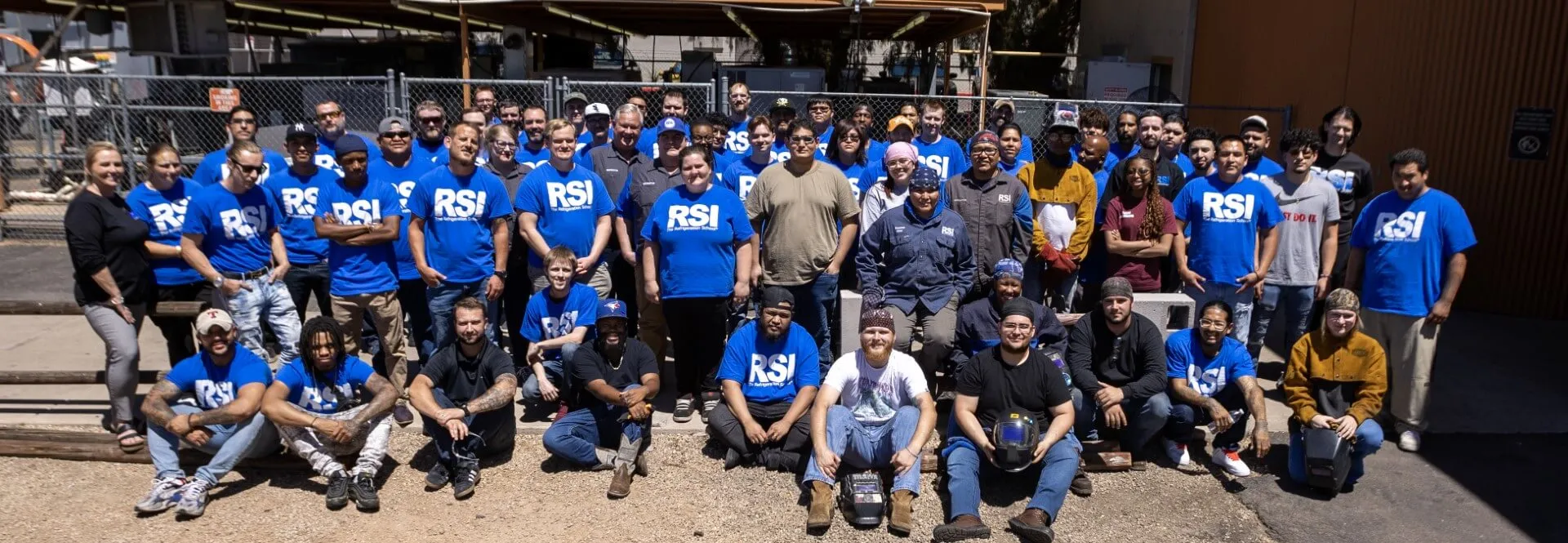
The Refrigeration School, Inc. (RSI) in Phoenix, Arizona, offers hands-on training programs in three high-demand trades:
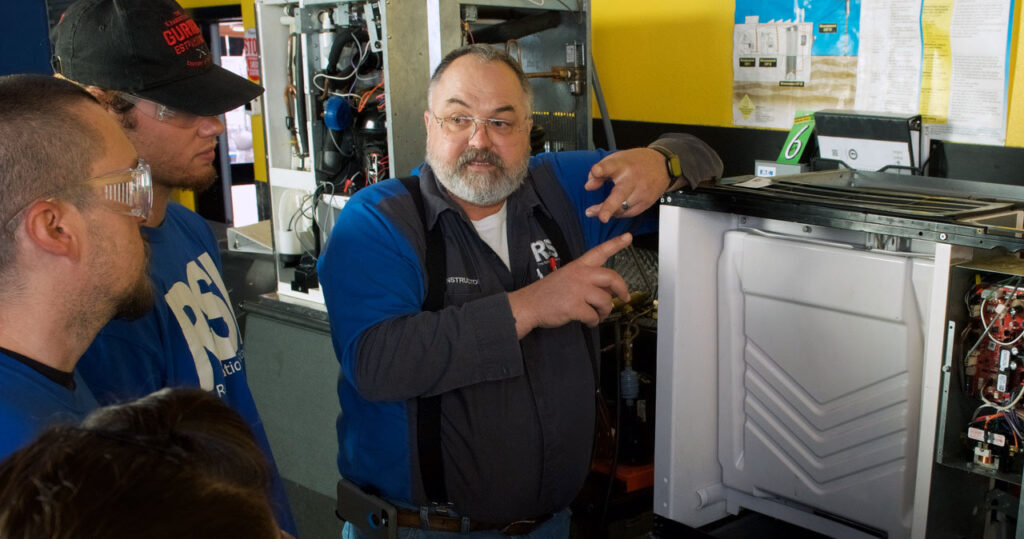
- HVAC/Refrigeration: Learn to install, maintain and repair heating, cooling and refrigeration systems.
- Electrical Technologies: Build foundational skills in electrical distribution, wiring, lighting and solar power principles.
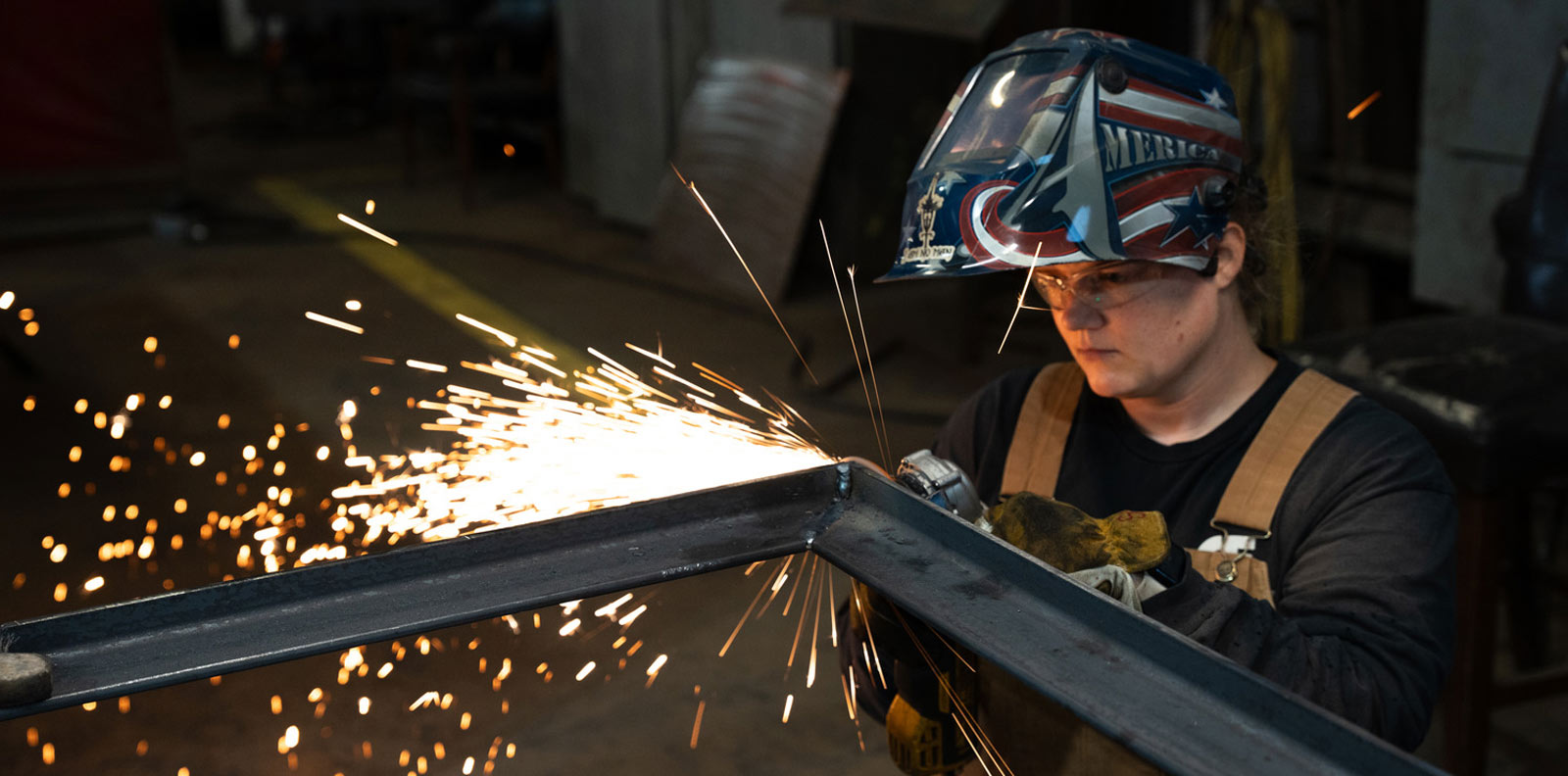
- Welding Specialist: Gain practical welding skills across structural, pipe and thin alloy applications.
RSI also offers an Electro-Mechanical Technologies program that combines HVAC/R and electrical training into a single nine-month course. Programs include flexible scheduling options, with day, evening, night and weekend sessions available.
For students concerned about cost, RSI provides information on financial aid options, including federal aid, scholarships, grants and payment plans for those who qualify. Military students may also be eligible for VA education benefits.
Where Do You Go From Here?
A retail or food service job can help you get by. A skilled trade can help you build something.
Three years from now, you could still be picking up extra shifts to cover rent. Or you could be an HVAC technician with certifications, a growing income and a clear path to what comes next.
The data supports it: stronger wages, faster-than-average job growth, transferable skills and real room to advance. But the choice is less about data and more about deciding what kind of future you want to work toward.
If you are weighing your career options after high school or looking at alternatives to college after high school, this is worth a serious look*. Reach out to RSI to learn about upcoming start dates and take the first step.
* RSI does not promise employment. We only provide assistance in identifying, applying for and interviewing for positions