Key takeaways
- Office support workers sit for most of the workday, while installation and repair workers stand for most of it.
- Early coursework covers electricity, refrigeration, and solar, and later HVAC and electrical courses keep building on those skills.
- Soreness from new physical work usually shows up one to three days later and rarely lasts more than five days.
- Office habits like careful record keeping and customer service are still useful for HVAC work.
TWS is a Great Training Option for Everyone
Learn more about how we can prepare you to advance your career.
Leaving a desk job for the trades means your first month of training swaps a seated workday for hands-on fundamentals that you learn in class and practice in a lab. At Tulsa Welding School (TWS), formerly The Refrigeration School (RSI), HVAC and electrical training includes fundamentals courses in electricity, refrigeration, and solar that teach schematic wiring, test meter use, and electrical safety. Expect to stand more, feel some soreness early on, and learn a new set of tools, starting from the basics.
The HVAC program and the electrical program each take about seven months, and the first few weeks are when the change from office life feels biggest.
What is it Like to Leave an Office Job for a Job in the Trades?
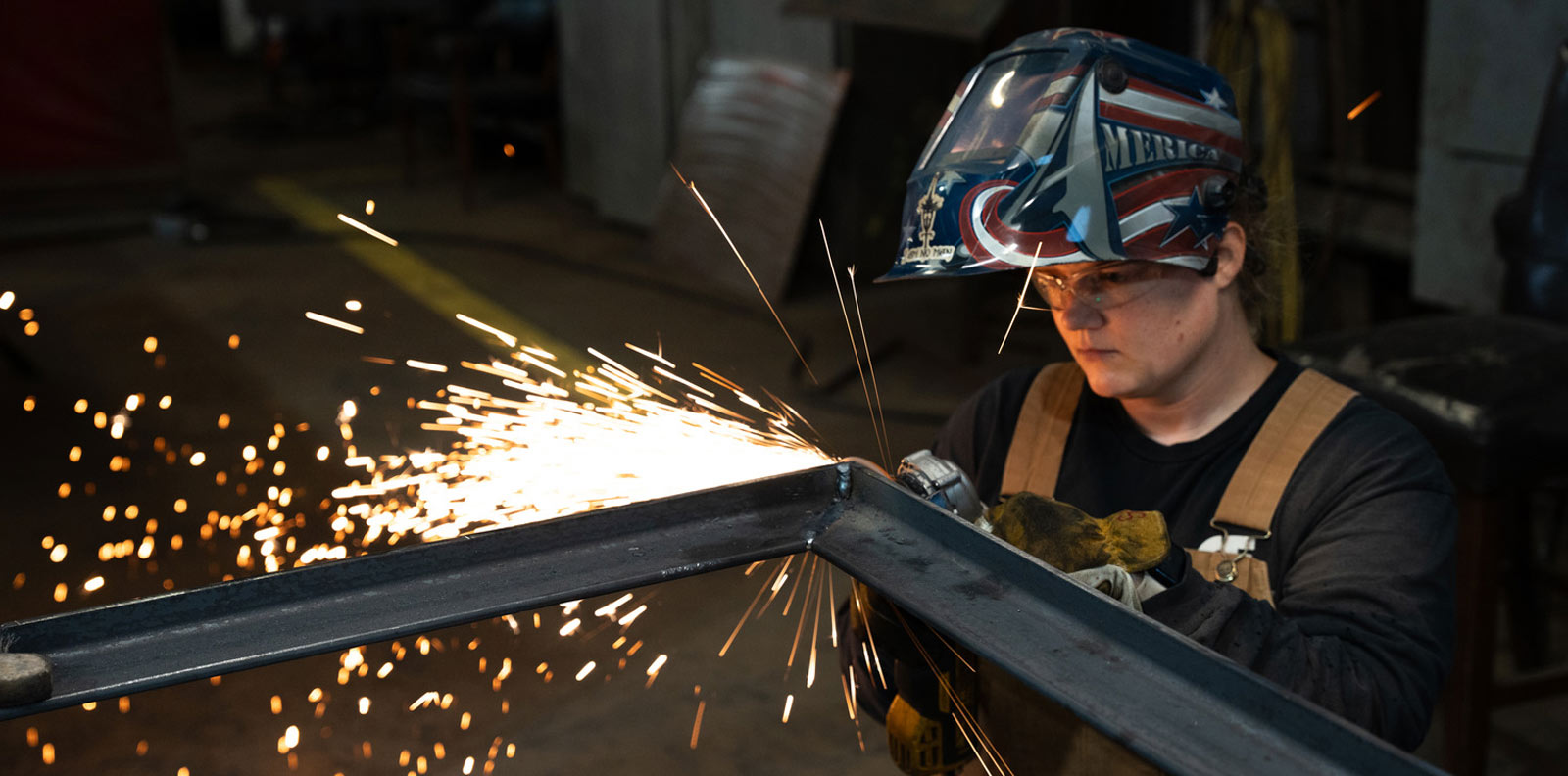
The biggest change is moving from a seated workday to a standing one. Office and administrative support workers spent 82.2% of their workday sitting in 2025, while installation, maintenance, and repair workers (the group that includes HVAC technicians) spent 80.8% of it standing.
The physical side of the job flips almost completely between the two kinds of work.
| Job requirement | Office and administrative support | Installation, maintenance, and repair |
|---|---|---|
| Share of workday sitting | 82.2% | 19.2% |
| Work in low postures required | 21.1% | 96.2% |
| Noise protection used | 0.6% | 38.8% |
| Can choose to sit or stand | 76.9% | 7.6% |
The setting changes too. HVAC technicians often work in awkward or cramped spaces, and some work outdoors in all types of weather. For anyone making the move mid-career, a career change at 40 follows the same path into training.
Get Started on the Path to a New Career
Fill out our form to learn how we can help you change your life.
What Do You Learn Early in Trade School?
Early trade school coursework covers the fundamentals of electricity, refrigeration, and solar, and those skills stay in use through every later HVAC and electrical course.
Each fundamentals course builds a different set of hands-on skills.
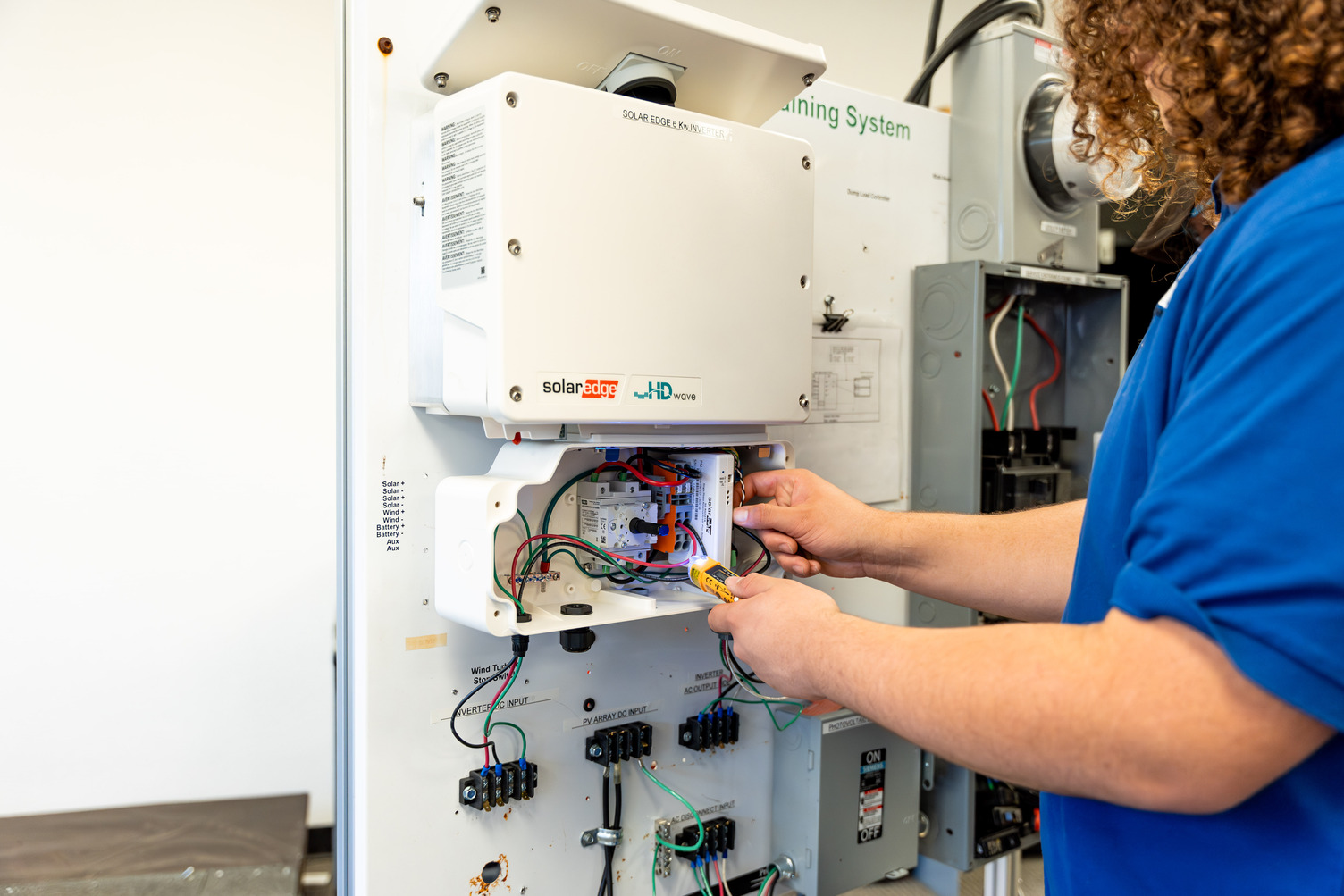
- Fundamentals of Electricity covers schematic wiring and test meter use, and it teaches the safety processes for handling electrical systems. Students practice on trainers with the dual voltage systems common in HVAC/R equipment.
- The same course teaches control circuit wiring, high voltage wiring, and single phase and three phase motors.
- Fundamentals of Refrigeration teaches the refrigeration cycle, how refrigerants behave, and how to work safely around refrigerants and rotating machinery. It also introduces the step-by-step process technicians use to troubleshoot mechanical problems.
- Fundamentals of Solar covers how photovoltaic systems are designed and installed, with an emphasis on wiring and electrical issues.
Fundamentals of Electricity is a prerequisite for the residential and commercial comfort systems, refrigeration systems, and advanced troubleshooting courses, so those skills keep coming back. Electrical students take the electricity and solar courses too before moving into residential and commercial wiring.
How is Lab Work Different from Desk Work?
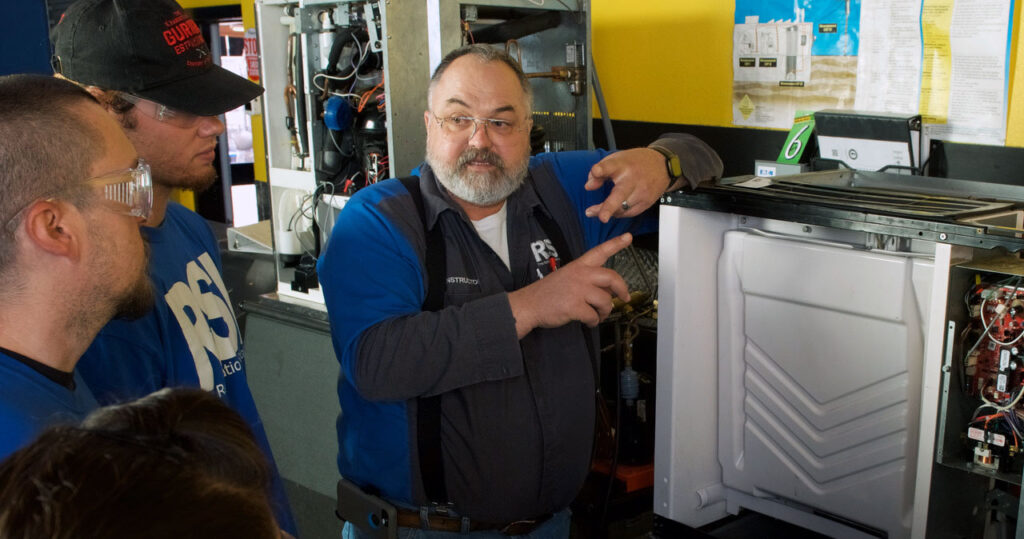
Lab work replaces screens with equipment you wire, measure, and troubleshoot. TWS uses a hybrid model in which theory is finished online by set deadlines, and campus time goes to hands-on lab work with tools, equipment, and instructors.
That setup means class concepts get applied right away. In Fundamentals of Electricity, trainers teach schematic wiring and meter use. In Fundamentals of Refrigeration, students watch operating equipment to see refrigerant change states as it moves through a system. Later, electrical students wire a scaled-down three-bedroom home and a mock commercial building to code.
In the home, they place wiring, circuits, switches, receptacles, lighting fixtures, and GFCI devices to code, using the National Electrical Code book as their guide.
The hybrid model also changes how you manage your time. Instead of a manager setting your day, online theory deadlines leave the timing of study up to you.
How Physically Demanding is the First Month Working in the Trades?
Expect your legs, back, and hands to notice the change. Soreness from a new physical activity usually starts one to three days later and rarely lasts more than five days.
HVAC work calls for physical stamina, including many hours walking, standing, or crouching in confined or uncomfortable spaces, and technicians may lift and support heavy equipment. Proper lifting technique and protective gear lower the risk of injury. Residential wiring coursework covers safety with hand tools, ladders, shock hazards, and personal protective equipment.
A few habits ease the adjustment.
- Warm up with light movement before long lab sessions.
- Start slow with new physical tasks instead of pushing through.
- Cool down and stretch after a long day on your feet.
- See a healthcare provider if pain lasts more than a week or feels sharp and constant.
What Does a Trade School Schedule Look Like After a 9-to-5?
TWS classes meet in five-hour weekday blocks in the morning, afternoon, or evening, with a 10-hour Saturday option. Each weekday block adds up to 25 class hours a week.
| Schedule | Class hours | Hours per week |
|---|---|---|
| Weekday morning | 7:30 a.m. to 12:30 p.m. | 25 |
| Weekday afternoon | 12:45 p.m. to 5:45 p.m. | 25 |
| Weekday evening | 6 p.m. to 11 p.m. | 25 |
| Saturday | 8 a.m. to 6 p.m. | 10 |
Online theory comes with deadlines rather than set class times, so study time can move to whenever fits around work or family. Weekend classes are available for both the HVAC/R and electrical programs, which keeps weekdays open for current work. Morning and evening blocks leave room for a job on the other side of class, and flexible class schedules help students balance training with kids.
Which Tools Will You Learn First?
The first tools are measurement tools. Test meters show up in Fundamentals of Electricity, and Fundamentals of Refrigeration introduces the manifold gauge set, vacuum pumps, service wrenches, and charging and recovery equipment.
Each tool ties to a specific course.
| Tool | What it does | Course where it shows up |
|---|---|---|
| Test meters | Measure voltage, current, and resistance | Fundamentals of Electricity |
| Manifold gauge set | Reads system pressures | Fundamentals of Refrigeration |
| Vacuum pump | Pulls air and moisture out of a system | Fundamentals of Refrigeration |
| Recovery equipment | Removes refrigerant safely | Fundamentals of Refrigeration |
| National Electrical Code book | Sets wiring requirements | Electrical Wiring, Residential |
You won’t need to buy the basics before day one. TWS provides students an extensive gear package of professional tools when training begins. For a deeper look at what goes in a starter kit, the electrician tool checklist walks through the essentials.
Is it Hard to Switch From an Office Job to HVAC or Electrical Work?
The switch is hard in different ways than office work, mostly stamina and hands-on skill. Habits office workers already use, such as detail-oriented record keeping and customer service, are qualities HVAC technicians need.
HVAC technicians keep complete records of the work, time, and parts on each job. They often work in customers’ homes and offices, so being friendly, polite, and punctual counts. Math skills matter too, for calculating the load a system needs to heat or cool a space properly.
Changing careers is also more common than it can feel. People born from 1957 to 1964 held an average of 12.9 jobs from ages 18 to 58. A resume that explains a career change helps employers see how office experience fits the trades. The first month after a desk job is an adjustment in posture, pace, and tools, and training starts with the basics so skills build from there.
Thinking about leaving your desk job? Schedule a campus tour and see the HVAC and electrical labs before your first day, or request more information about class times and start dates.