RSI is a Great Training Option for Everyone
Learn more about how we can prepare you to advance your career.
Roger, 31, from Phoenix, Arizona, completed the nine-month Electro-Mechanical Technologies (EMT) program at RSI in October 2023.
Thanks for your time, Roger; what did you do before coming to RSI? 
I worked for the Cardinals Stadium as a security guard straight out of high school. Then I went to the United States Marine Corps. I did my four years, and after I got out, I worked at Best Buy and went to college. But college really wasn’t for me. So, I went to work for the Maricopa County Sheriff’s Office. I was a Detention Officer for about five or six years before I quit because I didn’t feel I was helping any more.
Where did the idea of going into the HVAC field come from?
For years, my wife told me I should go into HVAC, and I was like, “You know what, it’s about time.” In the Marine Corps, my job was an Assault Amphibious Vehicle (AAV) Crewman, so I used to work on mechanical issues with the vehicle. I decided to go back to my mechanical roots, and HVAC was the perfect way in.
Get Started on the Path to a New Career
Fill out our form to learn how we can help you change your life.
Did you know about RSI having lived in Phoenix?
I didn’t, no. I researched HVAC schools in Phoenix, and of course, RSI came up.
Why did you choose the EMT program, rather than the shorter Refrigeration Technologies program?
Well, Arizona is known for just being hot, so everyone’s going to be hiring HVAC technicians all the time. I decided that if I added some knowledge of the electrical trade from the EMT program on top of the HVAC knowledge, I’d always have a job. Also, having served in the Marines, the GI Bill paid for a lot of it. Doing the longer program didn’t matter to me; it’s only a couple of months extra to get that level of electrical knowledge. I quite work before I started, and just focused on the program.
What did you enjoy most about your time at RSI?
Honestly, the level of expertise that most of the instructors have. They were willing to give us their personal insights and experiences dealing with specific problems that we could see in the field; the more unlikely sorts of things that we may not encounter often. Hints and tips that went beyond the school curriculum.
Did the mechanical experience you had in the Corps help?
Yeah, it helped a lot, but I didn’t feel like it was necessary to have that experience. Everything was pretty basic, you just had to find different ways to solve issues. The students who usually had trouble were those who were straight out of high school; they haven’t had the life experiences where they’ve had to figure out different ways to resolve complex things. I guess thinking outside of the box.
So, it sounds like the program came easy to you?
Yeah, it wasn’t hard at all. I got the Top Tech award. I finished every little piece of work. If you want to learn this subject, and you give the program the attention it needs, then you shouldn’t find it hard. But if you don’t want to learn the material, perhaps you’re just here going through the motions because your parents told you to do this course, then you might struggle a little. If you read the materials and give the program your focus, then you’ll be set. If you choose not to really do anything, then you’re going to need a lot of help.
Did you enjoy the hands-on work on the program?
I think the hands-on work is what really helps you later on in the field. You get to know the exact way things are wired, what it should look like, and how electrical connections are made. Most of the students I met came to this program because they don’t like bookwork. They’re more hands-on learners, and that’s what they want to do. So, when you’re able to teach them hands-on, they’ll more likely understand it. But if you sit there and beat them over the head with PowerPoint, they’re not going to really understand!
What’s the balance between hands-on and classroom instruction on the EMT program?
It’s about 50/50. Reading the materials is helpful, and that’s okay for the people who are able to understand it. There are different types of learners and luckily, I’m one of those who are able to learn from both bookwork and hands-on. I feel like my class in particular needed the hands-on experience more. I helped out quite a bit, teaching my fellow students a few things when the teachers weren’t available.
Did you enjoy the teaching part – is that something you’d like to do in the future?
I really want to go back to it. I’ve done it before. I was a combat marksman coach in the Marine Corps. I’ve trained other officers, and I was good at it, and now I’m training other engineers at the Four Seasons to do their job as well. One of the RSI instructors wanted me to apply for an open position in Phase Nine, but I don’t yet have the necessary experience in the field.
You mentioned the Four Seasons, is that where you’re working?
Yes, the Four Seasons resort in Scottsdale. My job title is an Engineer C. I actually went to a job fair at RSI, and I applied the moment I got home. I got hired about a week or two after graduating in June 2023. It’s a pretty good time there, I enjoy it. Every day is a little bit different.
Congratulations! Is that a pure HVAC or a general Facilities Maintenance role?
Yeah, it’s everything in the book. It is HVAC, carpentry, guest room calls, plumbing, kitchen equipment. If there’s a need for anyone to literally fix something, I’m the first one there to try and fix it.
Are you happy with the money you’re on?
The money’s not too bad. Every year they do about a 3% increase, so I got there right before an increase, so that was cool!
What’s your career plan from here?
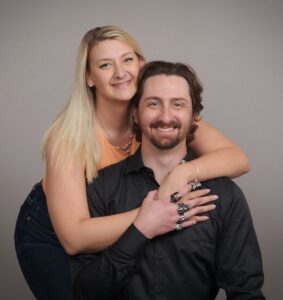
Hopefully, I can stay at The Four Seasons and grow. They have Engineer C, B, and A levels, and then you go to a specialty. Over time I could make really good money, and on top of that they offer good healthcare. It’s a good stable job; I don’t have to worry about losing my job during the winter as some installers might. That’s important to me as the man of the family, and the sole income earner. The stability is very appealing, and it’s very much needed. We have two kids, the youngest is just five months old. I also have a fairly stable schedule – 7am to 3.30pm – so unless we have a catastrophic issue to deal with, I’m able to be home by 4.30pm and go to games, hang out, and have a family life. I do work the weekends, so my “weekend” is Tuesday and Wednesday, but I never had weekends off anyway in all my prior jobs, so it doesn’t really matter.
What do you enjoy most about this trade – you mentioned every day is different?
I do like the variety and the fact that no issue is the same. I have gotten faster and I’m able to figure out the answer quicker, but usually not all answers are the same. I also like that I get to help people, and they’re typically happy about it!
What advice do you have for new students to be successful at RSI?
You just need to want it. As long as you’re there and you want to learn, you’ll be set. Do as much as you can, focus on the manual work, and ask questions. Asking questions is a huge thing. Even if it sounds like a dumb question, there’s no such thing as a dumb question. You’re new to the program and you don’t know this stuff.
If you’re an RSI graduate and would like to share your success and be an inspiration to others, please email [email protected] to be considered for a Graduate Connection interview. Please include details such as your graduation date (month/year) and program.