RSI is a Great Training Option for Everyone
Learn more about how we can prepare you to advance your career.
Welding has a learning curve, and new students run into common mistakes along the way. Making those mistakes while you’re still learning doesn’t mean you’re bad at this. The students who improve fastest aren’t necessarily the most talented. They’re the ones who know what to watch for and get corrected early when they slip up. Knowing these mistakes ahead of time won’t guarantee you avoid every one of them, but awareness gives you a real head start.
Mistake 1: Skipping Weld Prep
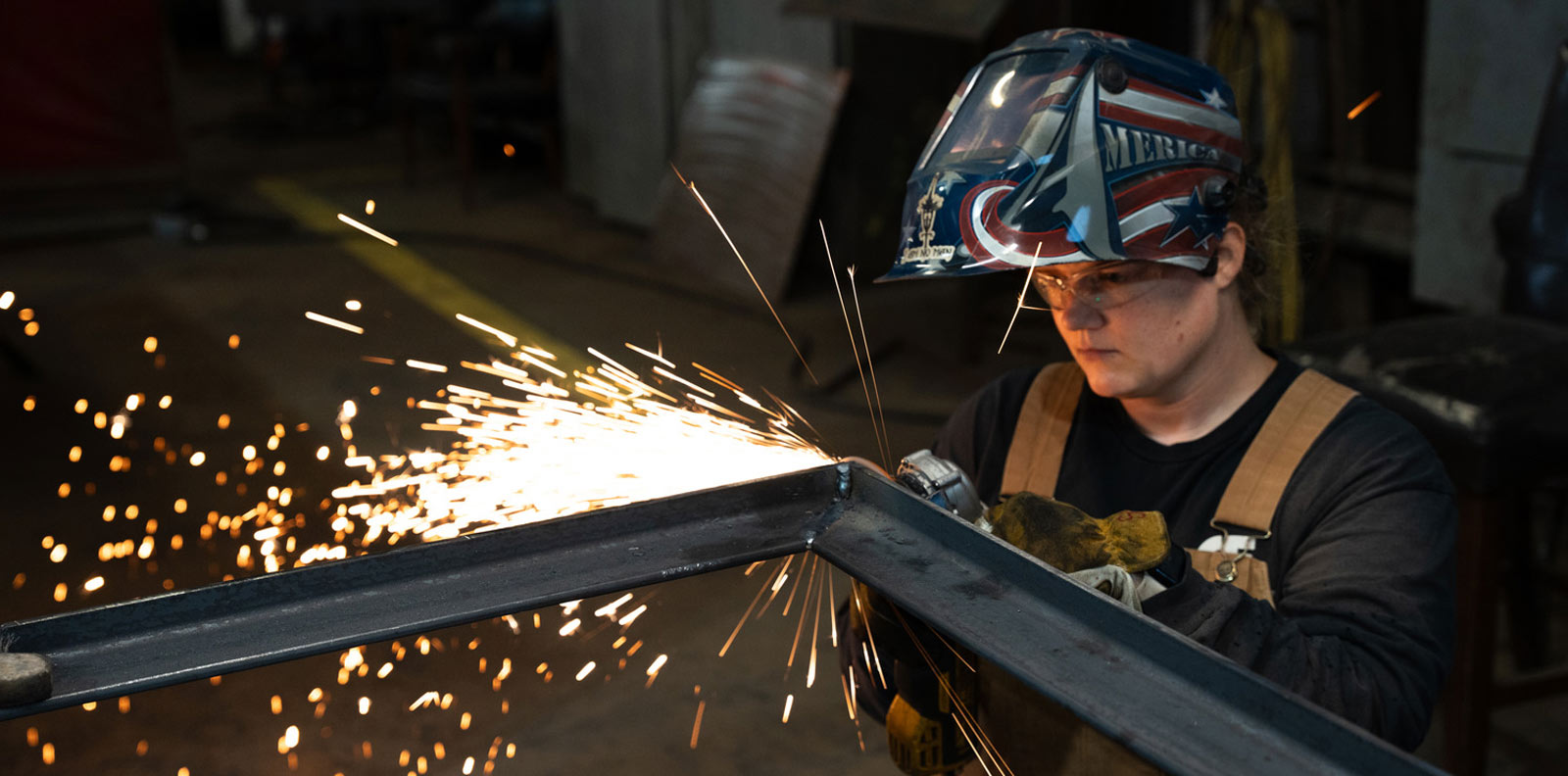
Dirty base metal causes more failed welds than poor technique ever will. Mill scale, rust, oil, and paint all interfere with fusion. The result is porosity, small gas pockets trapped in the weld that weaken the joint and show up as failures on inspection. Students who skip grinding and cleaning often can’t figure out why their welds keep cracking. The metal has to be clean before the arc starts.
Joint fit-up is the other half of prep that beginners overlook. Gaps that are too wide or too tight change how heat moves through the joint and how deep the weld penetrates. A structurally sound weld starts before the helmet goes down.
How to Avoid This
Treat prep as part of the weld, not a step before it. Before striking an arc:
- Grind or wire-brush the base metal to remove mill scale, rust, and contaminants.
- Wipe down the joint area to clear oil or paint residue.
- Check your fit-up. The gap should match the joint specification, not whatever the material happens to leave.
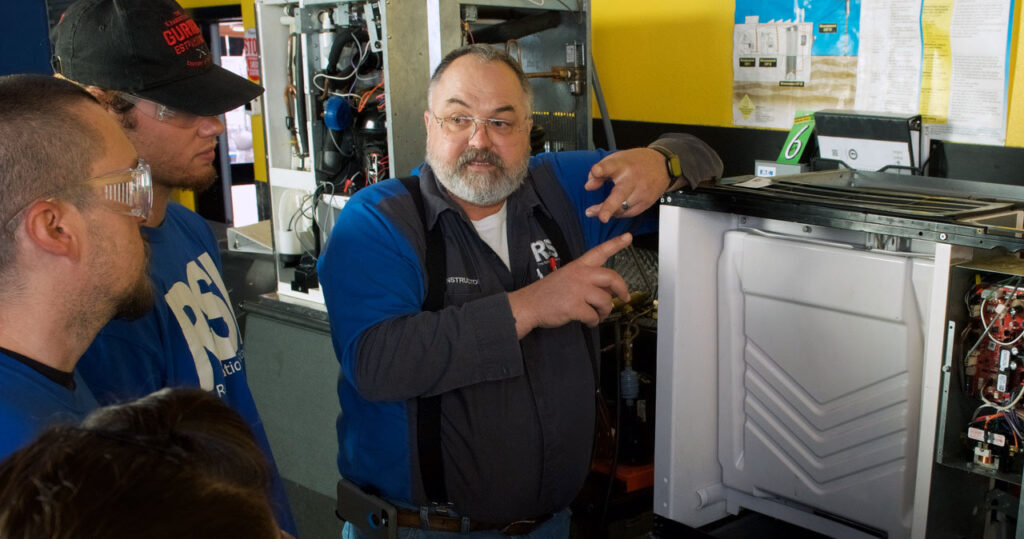
In a school environment, instructors catch prep shortcuts early, before they become reflexive. That early correction is harder to replicate on your own.
Get Started on the Path to a New Career
Fill out our form to learn how we can help you change your life.
Mistake 2: Inconsistent Travel Speed
Moving too fast produces a narrow, undercut bead with poor fusion at the edges. Moving too slow burns through the base metal or piles up excess material that has to be ground down. Neither looks right on inspection, and neither holds up under load.
Consistent travel speed is one of the hardest fundamentals to self-correct because the problem isn’t always visible at the moment. The bead looks passable until a weld test or X-ray reveals incomplete fusion underneath.
How to Avoid This
Drill travel speed as a standalone skill before worrying about the finished bead. Run beads on a scrap plate at different speeds and compare them side by side. A consistent bead width is the clearest sign that speed is under control. Welding programs use structured drills to build repeatable travel speed, the kind that holds up whether a student is fresh or four hours into a shift.
Mistake 3: Weak Safety Habits
Arc flash can cause corneal burns, retinal damage, and permanent vision loss. Students who flip their helmet up before the arc fully dies are taking a risk that compounds over time. The habit of waiting, every single time, has to be built early.
Fumes from coated metals carry their own risks. Welding galvanized steel releases zinc oxide particles that cause metal fume fever, a flu-like illness with symptoms including fever, chills, nausea, and muscle aches that typically appear within hours of exposure. Symptoms usually resolve within 24 to 48 hours, but repeated exposure without proper controls is what puts welders at ongoing risk.
How to Avoid This
Formal training programs build these welding safety habits into daily lab sessions so students aren’t making judgment calls about when safety applies:
- Always lower and secure your helmet before striking an arc.
- Never weld coated, galvanized, or painted metal without proper ventilation or respiratory protection.
- Know what material you’re welding before you start. Different base metals and coatings carry different fume hazards.
Ventilation and respirator use apply on every job, not just the ones that feel hazardous. Safety habits built in school follow welders onto every job site after graduation.
Mistake 4: Not Reviewing Blueprints and Weld Symbols
Welding without reading the blueprint is like framing a wall without checking the floor plan. The weld may look clean and still be structurally wrong because it was placed in the wrong position, at the wrong size, or with the wrong joint type.
Weld symbols specify joint type, fillet size, finish, and position. A student who can’t read them will make incorrect welds even with solid technique. Walking onto a job site unable to read a weld symbol is a gap that shows up fast.
How to Avoid This
Blueprint literacy gets taught alongside hands-on skills in structured programs because employers expect both from new hires. Practice reading weld symbols on sample drawings before applying them in the shop. When a symbol isn’t clear, ask before welding. A wrong weld that has to be ground out and redone costs more time than the question would have.
Mistake 5: Not Being Open to Constructive Feedback
Welding feels personal when you’re learning. You’re putting in the effort, the heat is real, and the bead is right there for everyone to see. When an instructor points out what went wrong, it can sting, even when the note is delivered well. Students who get defensive or dismiss corrections in the moment tend to repeat the same errors longer than necessary.
The problem isn’t attitude in most cases. It’s that early-stage learners often can’t yet see what the instructor sees. A slightly wrong gun angle or a subtle change in arc length doesn’t always register until someone who knows what to look for points it out.
How to Avoid This
Treat every correction as a shortcut. An instructor catching a bad habit in week two saves a student from spending months ingraining it. The students who improve fastest aren’t the ones who never make mistakes. They’re the ones who hear the feedback, adjust, and run the next bead differently.
Ask questions when a correction doesn’t make sense. “Why does that matter?” is a productive question in a welding program. Instructors expect it. The goal isn’t to perform for an audience. It’s to build technique that holds up on a job site, and feedback is the fastest way to get there.
Should I Learn MIG, TIG, or Stick Welding First If I Want to Get a Job Fast?
The primary welding processes each serve different industries and skill levels. Most welding jobs call for proficiency in at least one, and experienced welders who can work across multiple processes, sometimes called combination welders, tend to qualify for a wider range of work. For students focused on getting hired quickly, where to start matters.
| Process | Full Name | Best For | Notes |
|---|---|---|---|
| SMAW | Shielded Metal Arc Welding (Stick) | Construction, pipeline, structural steel | Works on contaminated surfaces; portable; suited for field conditions |
| GMAW | Gas Metal Arc Welding (MIG) | Manufacturing, automotive, fabrication | Fast to learn; widely used in entry-level roles |
| FCAW | Flux-Cored Arc Welding | Outdoor and field fabrication | Similar to GMAW; no shielding gas required; performs well in wind |
| GTAW | Gas Tungsten Arc Welding (TIG) | Aerospace, food-grade work, custom fabrication | Produces precise welds; requires more control and practice |
Most entry-level jobs list GMAW or SMAW as the minimum. Learning GMAW first gets students into the workforce. Adding SMAW, FCAW, and GTAW after that broadens the range of jobs and industries available to them. The Refrigeration School (RSI) Welding Specialist program teaches all of the major processes in a sequence designed to build each skill on top of the last.
Is Welding Hard to Learn If You Have Never Done It Before?
Welding is a motor skill. Holding a consistent angle, maintaining arc length, and moving at a steady pace all at the same time feels unnatural at first. With repetition, those movements stop requiring conscious effort and become automatic.
It’s normal for welding students to start with bad beads. Progress is visible in a way that few trades match. A student can look at their first bead and their bead three weeks later and see exactly how far they’ve come. The students who struggle longest are usually the ones without real-time correction. Structured training compresses that curve by catching technique errors before they calcify into habits.
How Long Does Welding School Take and How Fast Can You Get a Job After?
RSI’s Welding Specialist program runs seven months, with morning, afternoon, evening, overnight, and weekend class options so students can train without putting the rest of their lives on hold. Lab time runs five hours a day, four days a week, on the same kind of equipment used on actual job sites.
Completion is the foundation, not the finish line. Graduates who are prepared to pass a weld certification test on the first attempt, read blueprints without assistance, and walk onto a job site with consistent safety habits are the ones who move through the hiring process with confidence.
RSI’s Career Services team supports students beyond graduation, with employer partnerships across more than 40 states.
Start Building the Skill
The difference between plateauing on your own and building real, employable technique is structured feedback applied early. RSI’s Welding Specialist program puts students on real equipment from day one, training the processes employers hire for, and the habits inspectors check for.
If you’re ready to take the first step, request more information or schedule a tour of RSI’s Phoenix campus.