TWS is a Great Training Option for Everyone
Learn more about how we can prepare you to advance your career.
Apprenticeship sponsors and employers don’t expect a brand-new hire to have already mastered the trade. However, they expect new hires to be comfortable switching between skills and maintaining safety as they work. While an online electrician school can do a great job teaching electrical theory, it can’t provide the practical experience needed to apply that theory to basic tasks.
That skill gap will show up when an online program graduate applies for an apprenticeship or an entry-level job without hands-on training.
Video-based instruction is genuinely good at teaching code, math, and circuit theory. The gap comes down to four physical skills that no screen can teach, yet sponsors still check for them.
What an Online Electrician School Curriculum Actually Covers
A typical online electrician school does a solid job with the conceptual side of the trade. Students work through the National Electrical Code (NEC), learn Ohm’s Law and circuit theory, and move through self-paced video modules on grounding, wiring methods, and safety fundamentals. For someone who wants to understand how electricity behaves and why the code requires what it requires, this format works well.
Where an online trade school curriculum runs out of road is physical execution. A video can explain what a breaker panel does, but it can’t put a torque wrench in your hand and correct your technique in real time. That split becomes clear once you compare what each side actually covers.
Get Started on the Path to a New Career
Fill out our form to learn how we can help you change your life.
| Online Curriculum Covers | What Sponsors Actually Test For |
|---|---|
| NEC theory and Ohm’s Law | Panel and switchgear installation |
| Circuit theory, code navigation | Conduit bending to code |
| Self-paced video modules | Reading a blueprint on a real site |
| Safety concepts and terminology | Diagnosing a live circuit |
Panel work, conduit bending, blueprint reading, and live troubleshooting all require a body in a physical space, responding to physical feedback. Regardless of the quality of an online electrician school, its curriculum can’t replicate hands-on experience.
The Skills Apprenticeship Sponsors Test For First
Formal testing bookends an electrician’s career. The apprenticeship aptitude test run jointly by the National Electrical Contractors Association (NECA) and the International Brotherhood of Electrical Workers (IBEW) screens applicants before they’re placed with a sponsor. Years later, on the other hand, the state licensing exam tests knowledge of the National Electrical Code before someone can work independently as a journeyman.
Between those two formal tests sits a longer, less formal one. Apprenticeships pair 2,000 paid hours of on-the-job work with classroom instruction every year, and how someone performs during those hours matters as much as anything on paper. Some of what gets checked shows up before a sponsor will hire someone at all, since certain tasks won’t be handed to a brand-new apprentice regardless of what they studied.
Other parts show up early in the actual work, once someone is already on-site. These four gaps split across both moments, and neither one is something an online trade school format can prepare a student for on its own.
Panel and Switchgear Work Is Physical, Code-Governed Labor
Panel work sits on the “before hire” side of that split. Nobody expects a brand-new apprentice to wire a panel solo, but sponsors do notice whether a candidate has any real exposure to it at all.
Working on a panel means working inside rules that a video can describe but can’t enforce. The Occupational Safety and Health Administration (OSHA) sets specific requirements for panelboard working space and overcurrent protection, and those requirements exist because the physical margin for error is small. Panel components add another layer of difficulty, since some can weigh up to 40 lbs, which means installing or servicing one takes real strength and balance, not just knowledge of where the wires go.
Torque specs on terminations, correct breaker sizing, and proper clearances are all things an instructor checks by watching someone do them, not something a self-paced quiz can verify. That’s why panel work still sets a candidate apart even though nobody expects mastery of it right away.
At TWS Phoenix, the Electrical Distribution Systems course inside the Electrical Technologies program has students size overcurrent protection and work with switchgear directly, so the exposure exists before a sponsor ever asks about it.
What Does Bending Conduit to Code Actually Require?
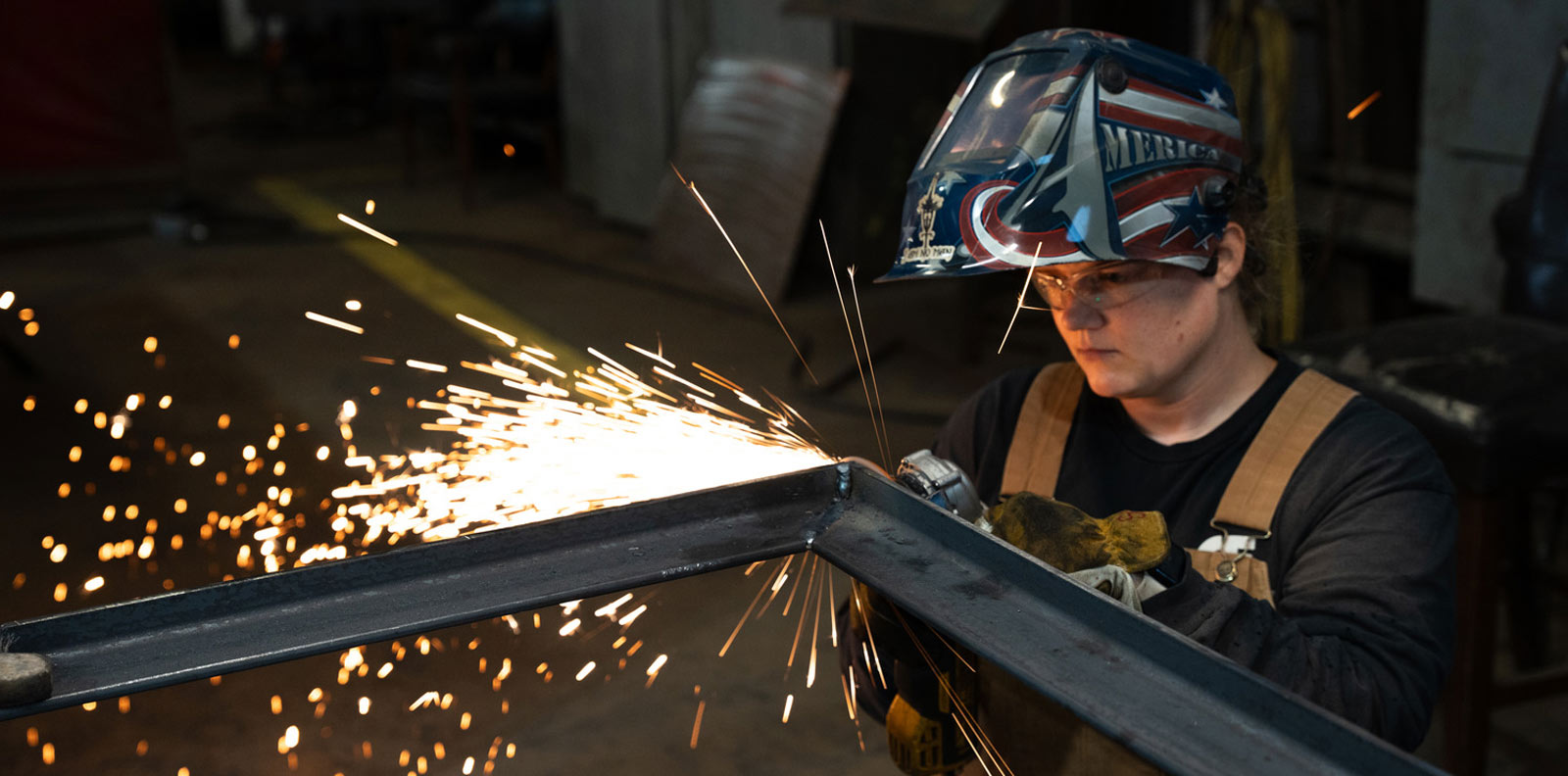
Conduit bending looks simple in a video. All it takes is a hand bender, a mark on the pipe, a foot pedal or handle, and a clean 90-degree angle.
In practice, getting that angle right depends on feel, since it comes down to how much pressure to apply, how the material responds, and how to account for spring-back so the final bend lands where it needs to. Get it wrong and the run doesn’t line up, which means costly rework and, on a real job, a supervisor who now has to decide whether to trust that person with the next run.
This is exactly the kind of correction that has to happen on-site, in real time, because a paused video can’t watch someone’s hands and tell them to ease up on the pressure. Conduit work shows up early in most apprenticeships, though exactly how early varies by employer and program.
Either way, it’s one of the first physical skills a new hire gets watched on. TWS trains students to bend conduit up to 6-inch trade size using hydraulic equipment, so the feel for the material is already built before a student ever steps onto a job site.
Blueprints, Load Calculations, and a Real Job Site
Reading a job site is its own skill, separate from reading a blueprint in isolation. A blueprint symbol only really resolves once it’s checked against actual wall framing and rough-in work, and a load calculation only means something once it’s applied to real wire runs instead of a diagram on a screen.
Site awareness goes beyond the technical reading, too. It includes spotting hazards, staging materials so the work flows, and coordinating with other trades working the same space.
A live job site changes hour to hour, as framing gets adjusted, other trades move through, and conditions shift. Static video can’t replicate that, because there’s nothing to adapt to.
Sponsors notice how a new hire moves through a site early on, since that’s often the clearest signal of whether someone can translate classroom knowledge into a working environment. TWS students get that practice directly, wiring a scaled residential structure first and then a commercial one, so the transition from paper to real framing happens before the first day on an actual job.
Live Circuits Don’t Follow a Script, So Troubleshooting Takes Reps
Troubleshooting sits on the same side of the divide as panel work. Nobody expects a new apprentice to diagnose a fault alone, but early exposure to the process still matters.
Before anyone works on a live circuit, lockout and tagout procedures have to be followed, and knowing when and how to apply them isn’t something that can be checked with a quiz. Multimeter readings vary from job to job in ways a scripted demo video never will, since real circuits don’t fail the same way twice.
Fault isolation, in particular, gets judged by an instructor watching in real time, checking whether the student tested the right points in the right order and read the results correctly. Solo fault diagnosis takes years to earn, but early, supervised exposure to the process is still what separates a candidate with some real reps from one who’s only seen it explained.
The Fundamentals of Electricity course builds that experience directly, working through trainer-based troubleshooting scenarios well before a student applies anywhere.
TWS Pairs Online Theory With Hands-On Labs
None of this is an argument that online instruction has no place in electrician training. The theory portion of the trade, including code, math, and circuit fundamentals, genuinely works well in a self-paced format. The issue is what happens when a purely online electrician school treats that as the whole curriculum instead of one half of it.
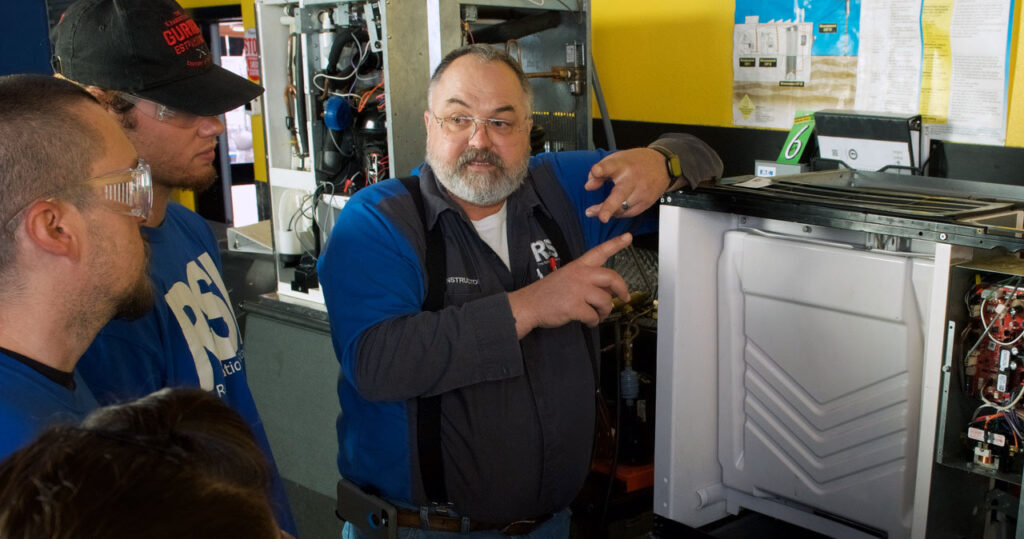
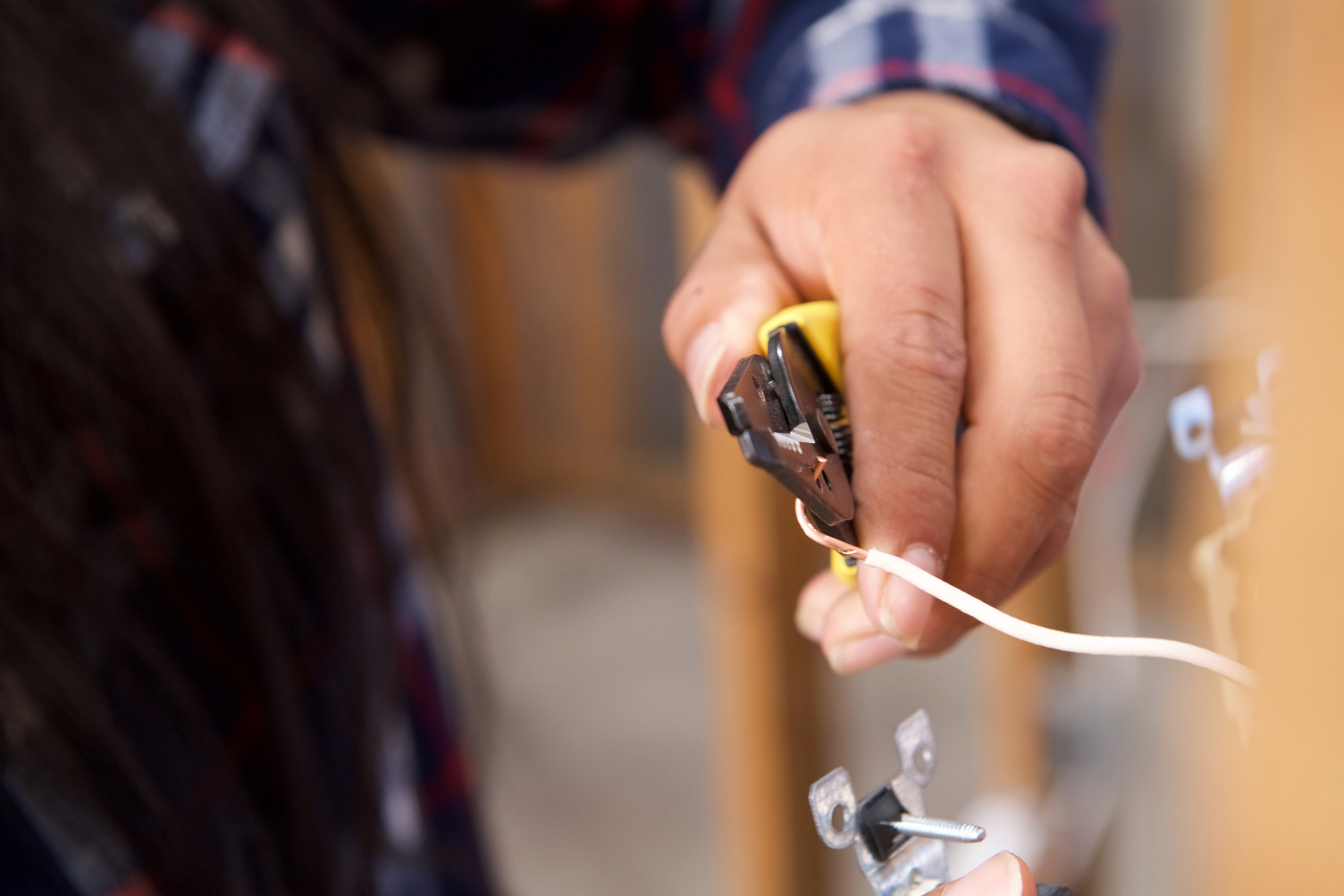
TWS’ Electrical Technologies program is built around that distinction. Students complete the theory portion online, on their own schedule, and then spend their on-campus time in hands-on labs with real panels, real conduit, and real tools under an instructor’s direct supervision. The program runs seven months and includes a full gear package, so students aren’t reading about tools, they’re using them from the start.
By the time a graduate applies for an apprenticeship, the panel exposure, conduit reps, and troubleshooting practice are already logged. That’s the difference between showing up with theory alone and showing up with something a sponsor can actually see.
Ready to Close the Skill Gap?
If you’re weighing an online trade school against something more hands-on, the question worth asking isn’t which one teaches better theory. It’s which one gets you through the door on day one.
Explore the program at TWS Phoenix and see how the hybrid model works, or request more information to talk through start dates and scheduling options that fit your current commitments.