TWS is a Great Training Option for Everyone
Learn more about how we can prepare you to advance your career.
Companies building AI infrastructure are on pace to spend roughly $697 billion in 2026 alone. Much of that money goes toward physical buildings full of servers, and each of those facilities needs someone to keep it from overheating.
Digital Realty, one of the largest data center operators in the country, has already widened its hiring criteria to bring in master electricians, heating, ventilation, air conditioning, and refrigeration (HVAC) technicians, and people with no data center background at all, then train them from scratch. That’s a company changing how it hires because it can’t fill roles fast enough.
Construction is outrunning the workforce that knows how to build and run these facilities. That gap is what’s opening data center HVAC jobs right now.
The Construction Pipeline Is Outrunning the Labor Pool
The pace of data center construction has not slowed down, and the numbers show why the labor market can’t keep up.
Where the pressure is coming from:
Get Started on the Path to a New Career
Fill out our form to learn how we can help you change your life.
- More than $88 billion in data center projects tracked for groundbreaking in the next six months
- $77.7 billion in 2025 construction starts, up 190% year over year
- Roughly 439,000 people needed to close the construction worker shortage tied to data center growth, as of late 2025
If even a portion of that pipeline breaks ground on schedule, 2026 could end up outpacing 2025’s already-record year.
That shortage spans electricians, pipe layers, and other skilled trades. HVAC technicians pull from the same limited labor pool. An aging workforce is making it worse, since experienced tradespeople are retiring faster than new workers are entering the field.
Construction jobs tied to data centers already pay up to 30% more than typical construction work, a sign of how tight that labor market has become.
Why the Shortage Lands on HVAC Specifically
Data centers run racks of servers that generate heat around the clock, and cooling systems account for roughly 40% of a data center’s total energy use. Climate control isn’t an add-on in these buildings. It’s a core system.
This equipment goes well beyond what a residential or light commercial HVAC technician typically trains on. Data centers use computer room air conditioners (CRACs), computer room air handlers (CRAHs), chilled water plants, and increasingly liquid cooling systems built for high-density server racks to handle continuous, round-the-clock operation rather than intermittent residential use. A partial shift to liquid cooling alone can cut facility power use by more than 25% compared to air-based systems, which is part of why more facilities are adopting it as server density climbs.
Most of these systems run redundant, backup units ready to take over if the primary system fails. That means facilities need multiple technicians on staff on an ongoing basis, not a single install-and-walk-away job.
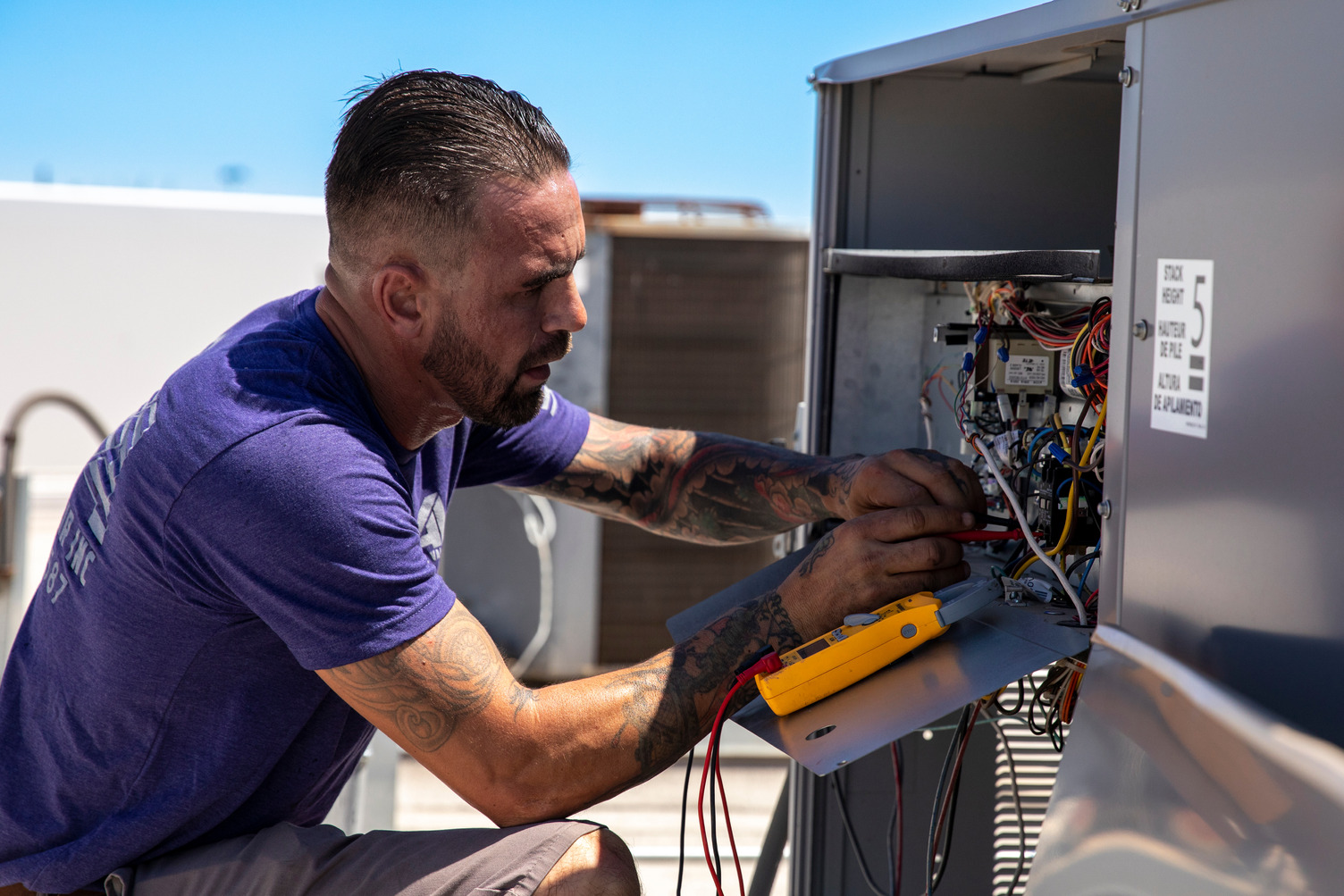
Day to day, that work looks like inspecting and testing systems, repairing or replacing worn components, and keeping detailed maintenance records, the same core duties described for HVAC technicians generally, just applied to higher-stakes equipment. Schedules can include evenings, weekends, and on-call rotations for emergencies, since a data center can’t go without cooling at any hour.
Is This a Fad or a Long-Term Career Move
A data center isn’t a marketing campaign that gets pulled if a company changes strategy. Project Stargate alone has already committed up to $500 billion to data center and energy infrastructure over four years. Commitments at that scale don’t unwind because of one bad earnings call.
Power supply is one of the biggest constraints already pushing project timelines out. Supply chain pressure on specialized electrical gear is stretching those timelines even further. That’s a slow, multi-year build cycle, not a trend that could reverse overnight.
Throughout this time, HVAC employment is projected to continue growing:
| What BLS Projects Nationally | Figure |
|---|---|
| Employment growth, 2025 to 2035 | 11% |
| Projected annual HVAC openings | About 40,600 per year |
| Growth pace vs. all occupations | Much faster than average |
A data center is concrete, wiring, and cooling equipment. Once built, it runs every day for years, no matter which AI company ends up ahead. The people who maintain that equipment are needed regardless of who wins.
HVAC skills aren’t locked to data centers. The same certification and hands-on experience carry over to:
- Commercial buildings
- Residential systems
- Hospitals
- Industrial facilities
If data center hiring ever cools off, the training still holds its value elsewhere. A role tied to a single app or platform disappears when that technology fades. HVAC work doesn’t carry that risk.
No program can promise a specific job or guaranteed placement.
What HVAC Technicians Earn Nationally
As of May 2025, HVAC technicians earned an annual median salary of $61,010, with most salaries falling between $40,050 and $77,060.
BLS doesn’t break out data center HVAC work as its own category, so there isn’t a government figure that isolates pay specifically for technicians working inside data centers. Employers hiring for this work include HVAC/R contractors, general contractors, property management companies, and data centers and server farms.
How Training Prepares You for This Kind of Work
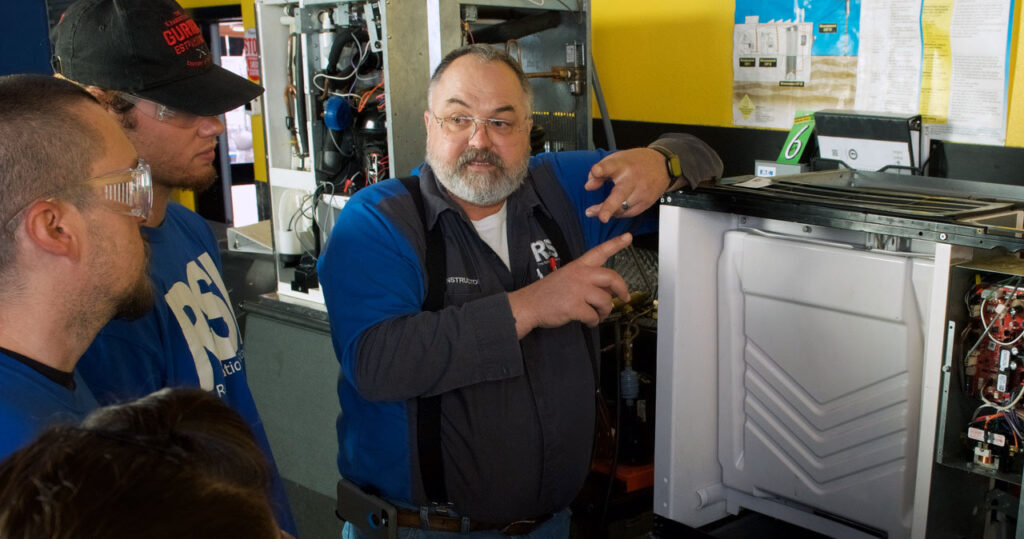
The good news is that breaking in doesn’t require years of unpaid experience or a four-year degree. At Tulsa Welding School (TWS), formerly RSI, the Refrigeration Technologies program takes about seven months to complete, built around entry-level placement rather than a multi-year commitment.
Environmental Protection Agency (EPA) Section 608 certification is the foundational credential here, required for anyone who handles refrigerants on the job. That certification requires passing an exam, typically built into the coursework itself rather than requiring separate outside preparation.
A structured HVAC program builds toward this certification directly, alongside hands-on hours working on the same categories of mechanical and electrical systems a data center runs on.
Graduates typically enter the field in roles such as:
- Apprentice or helper HVAC technician
- Service technician
- Maintenance technician
- Installation technician
- Refrigeration technician
- Facilities maintenance technician
- Building technician
With data center operators widening their hiring criteria, those without an HVAC background may be hired and trained internally. Formal training beforehand gives someone a strong grasp of the fundamentals before they ever apply.
The Specific Skills This Program Builds
TWS offers a Refrigeration Technologies program that builds several of these specific skills directly. The program moves in sequence: electrical fundamentals and residential systems first, then commercial system work, then a final course built around the E-STAR Trainer for advanced electrical troubleshooting.
- Hands-on training on reciprocating liquid chillers, the same category of equipment behind the chilled water plants used in data center cooling
- EPA 608 certification built directly into the curriculum
- Electrical troubleshooting and schematic wiring instruction, which matters here because data center cooling systems are tied into building management and control systems, not standalone mechanical units
Start Training for Data Center HVAC Roles
Construction spending isn’t slowing down, the labor shortage is real, and data centers are already a documented reason HVAC hiring is picking up. The next step is getting trained for it.
Reach out to talk to our team of experts about your goals and what it would take to get there.