RSI is a Great Training Option for Everyone
Learn more about how we can prepare you to advance your career.
Arizona’s welding workforce is projected to grow over 15% over the next decade, faster than the national average, and that growth is spread across two very different work settings. Manufacturing plants and construction job sites both need trained welders, but the environments, daily responsibilities, materials, and team structures are not interchangeable.
MIG, Stick, TIG, and Flux-Core processes appear in both settings, but how they are used and the materials they are applied to depend heavily on where a welder works.
A welder running production welds on aerospace components works differently from one fitting structural steel on a commercial building. The overlap exists at the foundational level. Past that, the skills become setting-specific.
Manufacturing Plants vs. Construction Job Sites
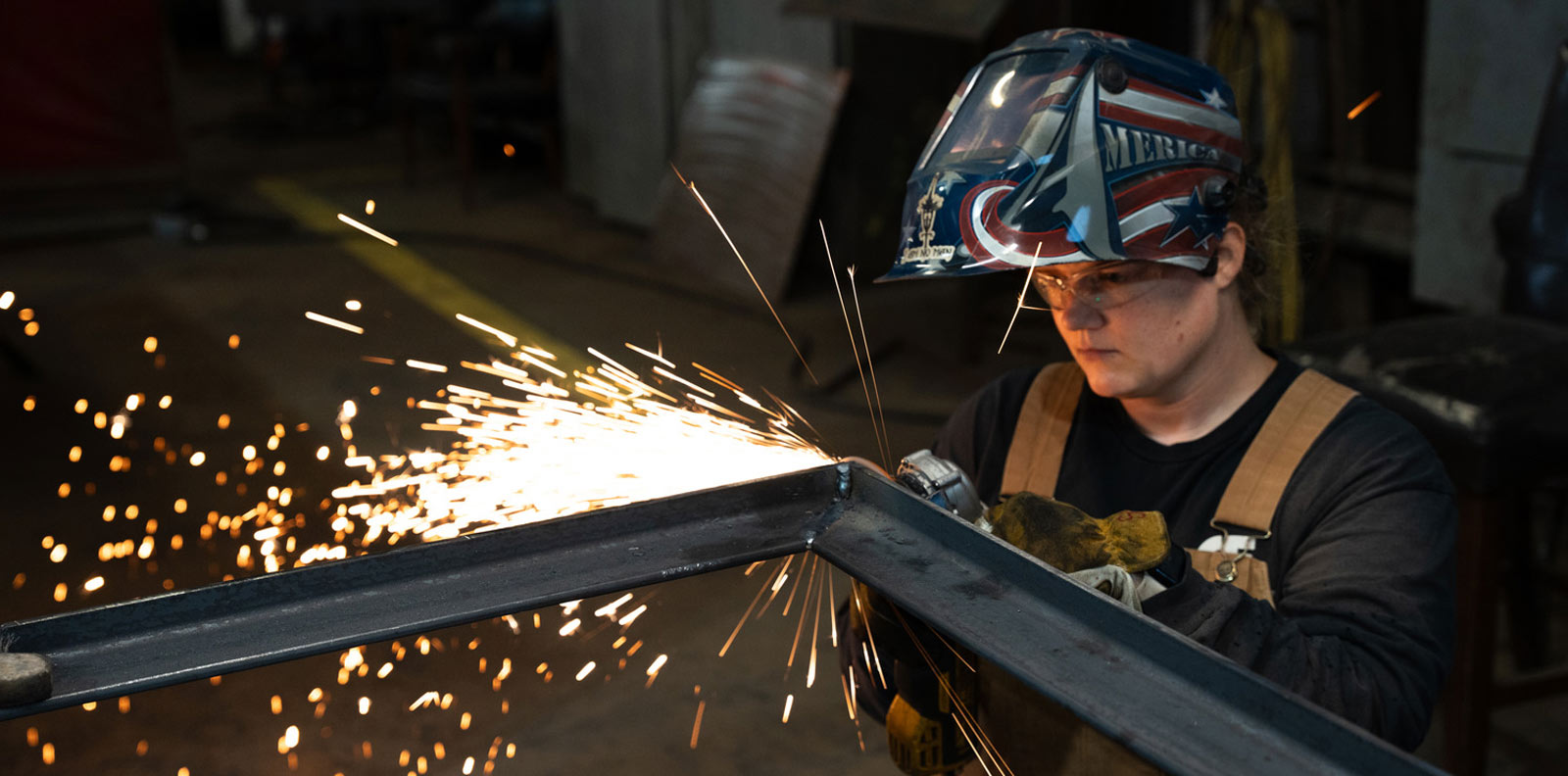
Welders may work outdoors in all types of weather or indoors, sometimes in a confined area designed to contain sparks and glare. The environment a welder enters depends entirely on the industry they choose.
| Factors | Manufacturing | Construction |
|---|---|---|
| Location | Indoors, shop floor or facility | Outdoors, active jobsite |
| Workstation | Fixed; same station each shift | Mobile; moves with project phase |
| Environment | Confined, ventilated area designed to contain sparks and glare | Open air; weather and site conditions vary daily |
| Schedule driver | Production targets | Project phases and deadlines |
| Heat exposure | Managed indoors | Summer temperatures regularly exceed 110°F; early-morning scheduling is common |
| Weather impact | Minimal | Stoppages for extreme conditions only |
Get Started on the Path to a New Career
Fill out our form to learn how we can help you change your life.
Daily Responsibilities in Each Setting
The core actions appear in both settings: reading blueprints, fitting parts, running welds. The rhythm and context around those actions differ considerably.
Manufacturing
Manufacturing welders work within a defined production system. Each shift opens with a safety briefing and a review of blueprints and the Welding Procedure Specification (WPS) at a fixed station. From there, the day centers on interpreting weld symbols, fitting parts, and producing consistent welds across production runs, where precision and throughput both matter.
Welders coordinate closely with quality control inspectors, engineers, and supervisors throughout the shift. Many manufacturing plants run two or three 8-to-12-hour shifts per day, keeping production running around the clock.
Common welding processes in manufacturing:
- MIG (GMAW) for high-volume carbon steel production runs
- TIG (GTAW) for precision metals in aerospace and medical device manufacturing
Construction
Construction welders work within a project timeline that shifts daily. The day begins with a jobsite toolbox safety talk, and task assignments follow the current phase of the build. Structural fitting, overhead welding, and multi-position welds are regular requirements as the structure progresses. Stick (SMAW) and Flux-Cored Arc Welding (FCAW) dominate outdoor structural work on thick metal. Welders work alongside ironworkers, pipefitters, and foremen, with constant coordination across trades. As projects wrap, construction and field welders typically move to new sites, with variable hours and some regional travel built into the work.
Materials and Certifications Employers Test For
The certification an employer requires on day one depends entirely on the setting. Training that covers both gives graduates more options from the start.
Manufacturing
| Material | Common Application |
|---|---|
| Mild steel | General fabrication, structural components |
| Stainless steel | Food processing, medical, and chemical equipment |
| Aluminum | Automotive, aerospace, consumer products |
| Titanium and Inconel | Aerospace assemblies and high-heat applications |
Key certifications manufacturing employers look for:
- AWS D1.1 for structural steel fabrication work
- ASME Section IX for pressure vessels and pressure piping
- AWS D17.1 for aerospace welding standards
Entry-level roles include fabricator/welder, production welder, spot welder, and assembly welder.
Construction
| Material | Common Application |
|---|---|
| Heavy structural steel | Buildings, bridges, industrial frameworks |
| Carbon steel pipe | Pipelines, refineries, mechanical systems |
| Rebar | Reinforced concrete structures |
Key certifications construction employers look for:
- AWS D1.1 for structural steel and ironwork
- ASME Section IX and API 1104 for pipe welding
Structural welders in construction typically pass an on-site weld test before their first day. The Refrigeration School, Inc. (RSI) Welding Specialist program prepares students for the same performance-based tests employers administer. Entry-level construction roles include welding helper/apprentice, field welder, and ironworker.
Schedules, Stability, and Work-Life Trade-Offs
The two settings diverge sharply on schedule predictability, and that difference matters for anyone deciding where to start a career.
Manufacturing
Manufacturing welders work a predictable shift structure: a full-time 40-hour baseline with overtime available when production demands it. Larger manufacturers typically offer benefits packages including health coverage and retirement plans.
The same facility, the same team, and minimal travel keep the environment consistent week to week. Welders who want a defined schedule and a path toward QC, supervisory, or technical support roles tend to find manufacturing a strong fit.
Construction
Construction welders work hours that follow the project cycle, not a fixed calendar. Hours run long during active phases and slow between jobs. Weather delays, permit holds, and phase changes introduce variability that manufacturing roles do not have.
Physical exposure is higher: elevation, Phoenix summer heat, and outdoor hazards are daily factors. Welders who prefer variety, outdoor conditions, and flexibility in schedule and location tend to fit construction well.
Does Structural Welding or Pipe Welding Pay Better and Which Has More Job Options?
Structural iron and steel workers earn a national median wage of $62,700 per year, with the top 10% reaching $107,520. Pipe welding consistently ranks among the highest-paid welding specialties, with the top 10% of pipeline welders earning up to $135,000 annually.
Combination welders holding certifications in both structural and pipe work tend to command the highest starting pay and carry the most flexibility across job types.
On volume, AWS job posting data from 2022 to 2024 shows 35% of postings were for welder/fabricators and 17% for pipefitters. Both categories post consistent openings year over year.
Arizona’s projected 10-year growth rate outpaces the national average. RSI’s Welding Specialist program covers thin alloy, structural steel, and pipeline systems, building the foundation for both pay tiers.
What Can Welders Expect to Earn in Phoenix Right Out of School?
Phoenix is one of the fastest-growing metros in the country, and that growth creates consistent demand for both structural and pipe welders. Semiconductor fabs, aerospace manufacturers, and construction contractors all hire entry-level welders year-round. The median annual wage for welders in the Phoenix-Mesa-Chandler area is $54,650, with entry-level wages starting around $42,750 and climbing past $83,000 as experience and certifications stack up.
Arizona requires no state welding license. Employers set their own bar through weld tests and certification requirements. AWS D1.1, ASME Section IX, and API 1104 credentials are what Phoenix hiring managers look for on a resume.
What Industries Hire Welders Right After Graduation?
Manufacturing absorbs the largest share of entry-level welders nationally. Fabrication shops, aerospace manufacturers, automotive suppliers, medical device companies, and consumer goods producers all hire welders directly out of training programs.
Construction follows closely, particularly in Phoenix, where transportation upgrades and commercial development are driving steady demand for structural and infrastructure welders.
Additional industries hiring new graduates:
- Oil, gas, and petrochemical: Pipelines, refineries, and offshore platforms hire welders in areas like the Gulf Coast, with entry-level roles available to graduates holding API 1104 or ASME Section IX credentials.
- Aerospace: AWS D17.1 certification covers fusion welding for aerospace applications and is the credential employers in this sector test for, with TIG proficiency on aluminum, titanium, and stainless the baseline expectation.
- Energy: Power plants and boilermaker positions are filled through apprenticeships and certification pathways that new graduates can enter directly from a welding training program.
Regardless of industry, most new hires start as a welding helper or apprentice. AWS D1.1 certification preparation, covered in RSI’s Welding Specialist program, is the credential employers most commonly test for at hiring.
Request more information or schedule a tour of RSI’s Phoenix campus to see the training floor.