RSI is a Great Training Option for Everyone
Learn more about how we can prepare you to advance your career.
Figure out what you want to do, go to school for it, graduate, get a job in that field, work your way up, and build a life you’re proud of. That’s the roadmap you were likely given by the adults in your life as you grew up. On the surface, it’s all so simple.
The truth is, most people’s actual experience looks nothing like that.
They pick a direction. They commit to it. Then somewhere along the way, perhaps mid-degree, late at night after a rough shift, or even a few years into their career, they realize it isn’t right for them. So they stop. But instead of trying something new, they find themselves in a cycle of waiting. They research more options. They second-guess everything. They tell themselves they’ll move when they’re sure.
You’re Not the Only One Feeling This Way
According to a LinkedIn survey, 67% of professionals say fear of making the wrong move holds them back, even when they already know their current path isn’t working. That’s not a personal flaw, nor does it mean those people lack direction. The problem is that most people are waiting to know for certain that this is the right answer before going all in as a safe bet. In truth, certainty can only come from doing the thing they’re hesitating to start.
There is no perfect career and no perfect time to start one. There are better careers and better moments, and holding out for perfection means passing both up, year after year.
Get Started on the Path to a New Career
Fill out our form to learn how we can help you change your life.
Nobody’s Career Goes According to Plan
The idea that most people arrive at a fulfilling career through careful advance planning is mostly a myth. The numbers tell a different story:
- 35% of college graduates say they would choose a different field of study if they could go back, according to the Federal Reserve’s 2024 report on household economics
- In some fields, regret runs even higher — over 40% of graduates in social sciences, humanities, and life sciences say they’d make a different choice
- The average American holds 12 jobs over a lifetime
- Gen Z is projected to work across six different careers before retiring
None of that is failure. It’s how careers actually develop for most people. The path adjusts as you go. You learn what fits by trying things, not by theorizing about them from a distance. The people who seemed to “always know” what they wanted are the outliers, and even many of them have quietly reinvented themselves more than once.
If your career hasn’t followed the script, you’re not behind. You’re in the majority.
What Career Choice Anxiety Is Actually Doing to You
Career choice anxiety is real, and it affects younger workers more than most people realize. According to Pew research, only 43% of workers under 30 say they are highly satisfied with their jobs, the lowest satisfaction rate of any age group. Feeling uncertain or unfulfilled at this stage isn’t a sign something has gone wrong. It’s the norm.
The problem is what happens next. When a previous career choice didn’t work out, the instinct is to be more careful the next time: research longer, consider more options, and wait until the right answer becomes obvious. That instinct feels responsible. In practice, it tends to backfire.
According to the American Psychological Association, 20% of adults report frequent indecisiveness that disrupts their daily lives. And research consistently shows that the longer a decision gets delayed, the less confident a person feels making it. Delaying doesn’t create clarity. It creates a feedback loop:
- Every option starts to feel riskier than the last
- The window to act seems to keep narrowing
- The habit of waiting gets stronger, not weaker
Career choice anxiety compounds when left alone. The longer you sit with it, the louder it gets, not because your options have gotten worse, but because inaction has become the default.
Clarity Doesn’t Come Before the Decision
Most people treat clarity as a prerequisite for action. They want to feel sure before they commit. But clarity is almost never what gets you to the starting line. It’s what meets you on the other side of it.
You Can’t Research Your Way to Certainty
Reading about a career and actually doing the work feel nothing alike. You can watch videos, take assessments, and spend weeks researching what a job involves, and still have no real idea whether you’d be good at it or whether it would hold your interest under actual conditions.
This is especially true for people who’ve already tried something that didn’t pan out. The fear of repeating that experience is understandable. But research is still theoretical. It’s easy to romanticize what a career could be based on what you read about it. How you actually feel once you’re in that position is a different story entirely. Research is a great starting point. It shouldn’t be the end point.
Research on indecisiveness makes the cost of waiting clear:
- The longer a decision is postponed, the less confidence a person has to eventually make it
- Waiting doesn’t resolve anxiety. It reinforces it.
Action Is What Generates the Information
Every experience you gain tells you something that no amount of reading ever could. Each one shapes your sense of what actually fits:
- Trying a training program tells you whether you can handle the material and the environment
- Working in a field, even briefly, tells you whether the day-to-day suits you
- Leaving something that wasn’t right tells you something valuable about what is
Life rarely goes according to plan. Careers are no different. Most people who end up in work they genuinely love didn’t map out a perfect route from the start. They moved, formed their own opinions along the way, and adjusted when something wasn’t working.
How to Decide on a Career When You’re Still Not Sure
When the options feel overwhelming and the right answer won’t show itself, here’s a more practical way to think about how to decide on a career.
Stop waiting for certainty. Start looking for “enough to try.”
You don’t need to be sure a career is the right one before you explore it. You only need to be willing to find out. The goal of your next step isn’t to arrive at a permanent answer. It’s to get information you don’t currently have.
Narrow the options down.
Researching all of your possible career paths isn’t necessarily a strategy. Rather, it’s a way of staying busy without committing to anything. Pick two or three directions that feel worth testing and focus there. Small steps add up faster than most people expect, and if two or three still feels like too much, start with one. The goal isn’t to have it all figured out. It’s to move forward far enough to learn something.
Talk to someone who can give you a real timeline.
One honest conversation about what a career actually looks like day-to-day, and when you could realistically start training for it, is worth more than hours of online research. This is where abstract interest becomes concrete possibility.
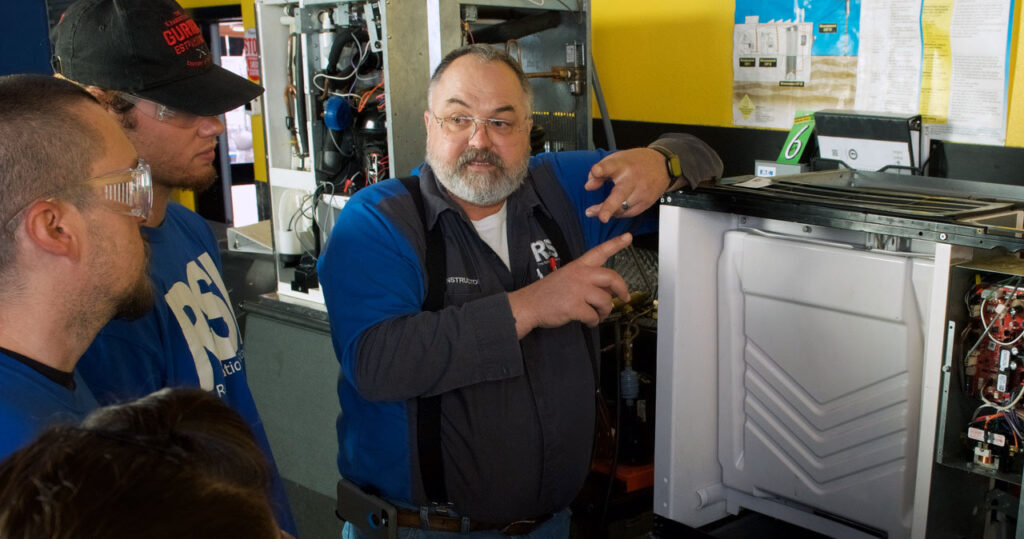
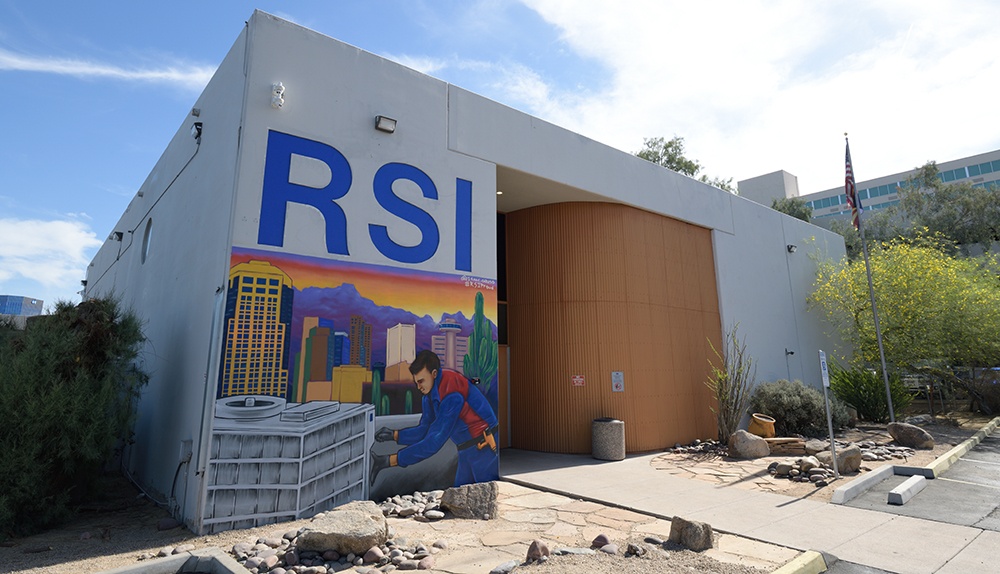
If you’re considering a trade career, talking to an admissions advisor or scheduling a tour at a reputable institution like The Refrigeration School, Inc. (RSI) changes the question from “should I eventually do something?” to “the next start date is six weeks out, do I want to be on it?” That’s a different kind of decision. A specific one. A much easier one to act on.
Set a deadline once you have a real date.
Open-ended searching drains energy without producing movement. Once you’ve had a real conversation and have an actual timeline in front of you, use it. Give yourself a date to decide. The structure alone changes how you engage with the options between now and then.
Treat the next step as a stepping stone, not a life sentence.
Regardless of what you decide to pursue next, whether it’s a new job, a degree, or a training program, this isn’t permanent. It’s a stepping stone to finding the career that works for you. If along the way you decide it no longer fits, make note of:
- What you did and didn’t like about it
- Which parts you wish had been different
- Which parts you hope to find again in whatever comes next
Use that as a roadmap when exploring your next option. Every experience narrows the gap between where you are and where you actually want to be.
A Shorter Path to Finding Out
For people thinking about skilled trades specifically, one practical advantage is how quickly training moves. A trade program takes months, not years, which means the test is lower-stakes and the results come faster. If it turns out to be the right fit, you’ve found your path. If it opens a door to something adjacent, you’ve still gained a skill set, a credential, and a clearer picture of where you want to go.
RSI offers programs in HVAC/R, electrical, and welding with flexible scheduling options across morning, afternoon, and evening, so starting a program doesn’t require dismantling your current life. It requires a decision.
That’s ultimately what separates the people who stay stuck from the people who move forward. Not talent, not timing, not finally finding the “right” answer. Just the decision to get information the only way you actually can: by starting.
Stop Waiting for a Sign. Talk to Someone Who Can Help You Plan.
If you’ve been sitting on a career decision, weighing options, researching programs, waiting for the moment it all feels obvious, it’s worth considering that the moment may not come until after you move.
The next step doesn’t have to be permanent. It just has to be a step. Request more information or schedule a tour to talk through what training actually looks like, what programs are available, and when you could start.