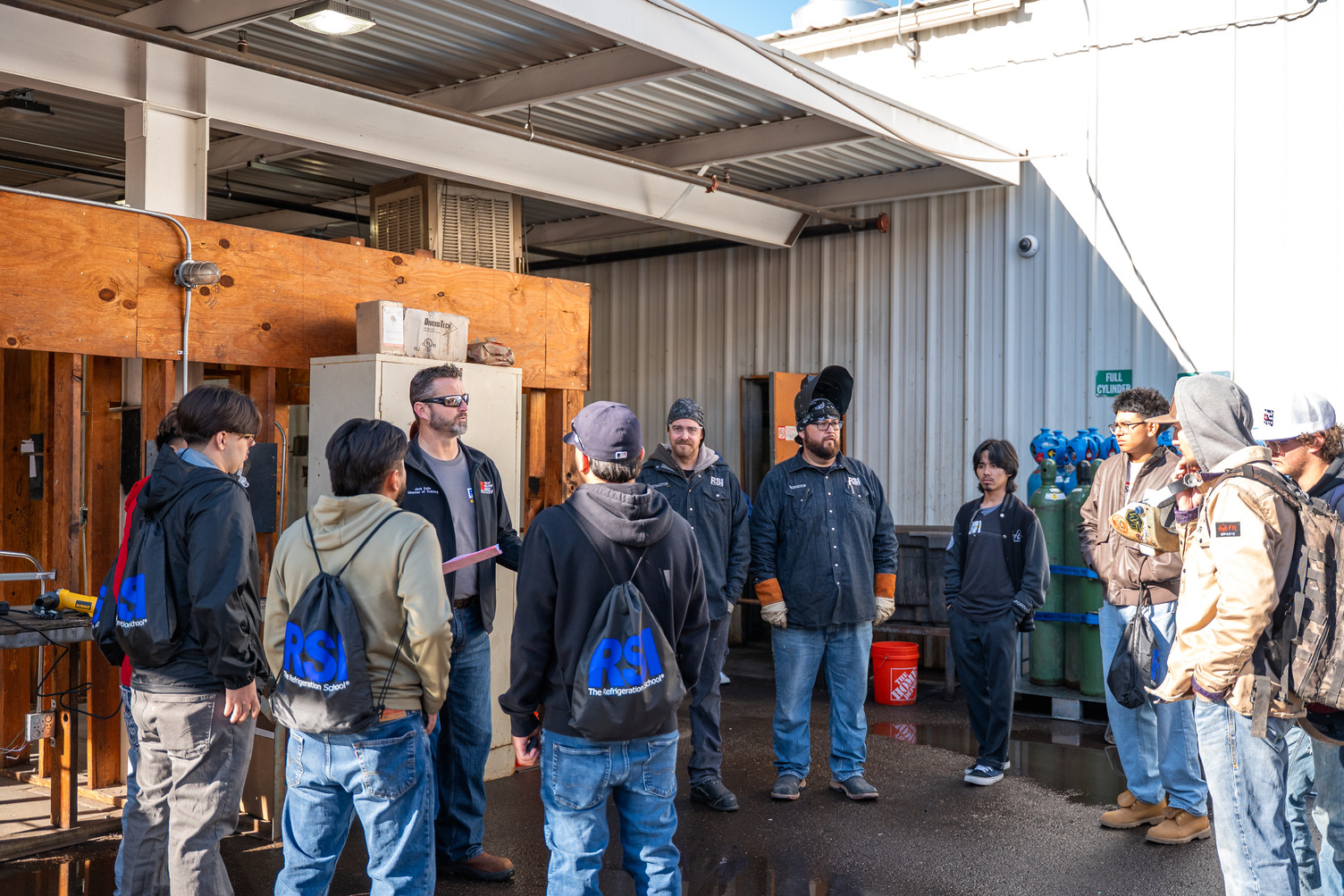
RSI is a Great Training Option for Everyone
Learn more about how we can prepare you to advance your career.
Most Arizona high school students have sat through college counseling sessions and been shown one fairly narrow version of what comes after graduation. Trades careers rarely get the same airtime, not because they’re less viable, but because they’re less visible in the standard school-to-career conversation.
That gap shows up in the data: 77% of Gen Z say it matters that their future job is hard to automate, and many are pointing to skilled trades as the answer.
Most students end up making significant decisions without ever having been shown what trades careers actually involve, where they lead, and what the Phoenix job market looks like for new trade grads.
What Skilled Trades Careers Actually Involve
The default assumption about trades work is that it’s repetitive, physical, and light on thinking. The actual work looks different.
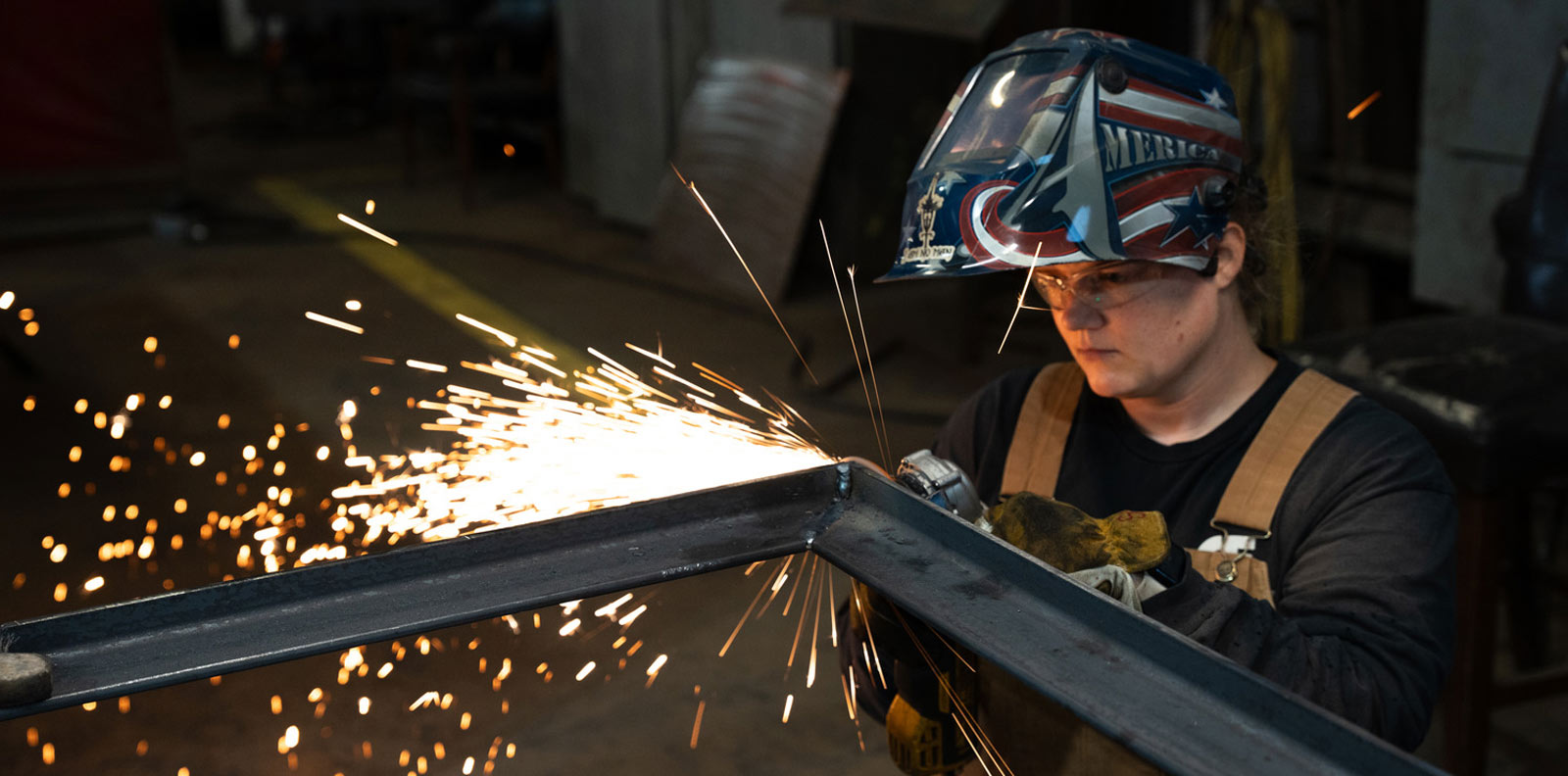
Heating, ventilation, air conditioning, and refrigeration (HVAC/R) technicians serve multiple job sites daily, moving between homes, commercial buildings, restaurants, school districts, and data centers. No two calls are the same. The work involves:
Get Started on the Path to a New Career
Fill out our form to learn how we can help you change your life.
- Reading refrigeration and electrical diagrams to understand what a system is supposed to do before diagnosing what it isn’t doing
- Applying EPA regulations and manufacturer specifications on every job
- Diagnosing system faults under time pressure, often without a supervisor on-site
- Explaining findings clearly to homeowners, facility managers, or business owners who need to understand the problem and what it costs to fix
Electricians take on residential, commercial, and industrial work, wiring systems, troubleshooting faults, and applying National Electrical Code (NEC) standards to every installation. A single week can span a single-family home, a manufacturing plant, and a data center.
Both fields are expanding in technical scope. Smart building systems, solar installations, data center infrastructure, and EV charging are all creating new specializations within electrical and HVAC work.
Within HVAC, installer and technician roles are distinct paths. Installer work is team-based and tied to new construction. Technician work is diagnostic and service-call-driven. Both are reachable from the same training foundation.
Why These Careers Are Difficult to Automate
Automation performs well in structured, predictable, repeatable environments. Trades work is structurally different, and that distinction matters more for anyone choosing a career now than it did for previous generations.
The specific reasons these jobs are hard to automate:
- Variable physical environments. Crawlspaces, rooftop units, and electrical panels installed decades ago in non-standard configurations require manual dexterity and real-time problem-solving that robotics has not solved at scale.
- Unstructured problem sets. Every job site is unique. Diagnosing a failing HVAC unit in a building with an unusual installation history is a fundamentally different kind of problem than processing a transaction or following a mapped route.
- Code interpretation and adaptability. Electricians must read building codes and adapt to environments that differ every time. That interpretive judgment is not something software handles reliably in the field.
- Customer communication. Techs explain diagnoses, walk clients through repair options, and answer questions on the spot. That trust-based interaction is built into the job.
Skilled trades are facing acute shortages while remaining resistant to the automation affecting other industries.
The AI infrastructure boom is accelerating trades demand rather than threatening it. Every data center built to run AI models requires electricians to wire it and HVAC technicians to cool it.
The US will need up to 140,000 additional electricians, HVAC technicians, and welders by 2030 just to build and maintain that infrastructure. Google announced a $10 million grant to train electricians in April 2025 because the labor shortage is constraining expansion.
AI is also becoming a tool that tradespeople use, not a replacement for them. Diagnostic software, smart system controls, and scheduling applications are part of how modern techs operate, and that integration makes skilled workers more productive rather than obsolete.
The Career Advancement Arc
Entry level is not the ceiling on a trades career path. The progression for both electricians and HVAC technicians follows a licensing structure with real milestones.
Electrician career pathways in Arizona:
- Apprentice. Entry-level work under licensed electricians, logging documented hours toward journeyman requirements. This is where RSI graduates start.
- Journeyman electrician. Requires documented work hours and a state licensing exam. Unlocks a broader scope of permitted work and higher pay.
- Master electrician. The top licensing tier. Required to pull permits independently and run electrical contracting operations.
Along that path, specializations in data center systems, solar, mission-critical infrastructure, and telecommunications open higher-paying opportunities. Electrician employment is projected to grow 9% through 2034, with roughly 81,000 openings per year nationally.
HVAC career opportunities in Arizona:
- Entry-level technician or installer. Service calls, system installations, and maintenance work under licensed supervision while building hours toward licensure.
- Licensed HVAC technician. Requires a state license and EPA Section 608 certification, which federal law requires to handle refrigerants. Technicians without it are ineligible for a significant portion of available work.
- Specialization. Commercial refrigeration, data center cooling, solar systems, and building automation all push earnings higher and open a more distinct career lane.
Many experienced tradespeople in both fields eventually run their own businesses. A licensed HVAC contractor or master electrician with an established client base operates on a different income level than the entry wage suggests.
HVAC Career Opportunities and Electrician Career Pathways at RSI
The Refrigeration School (RSI) offers two programs that cover the training foundation for both fields, each completing in seven months.
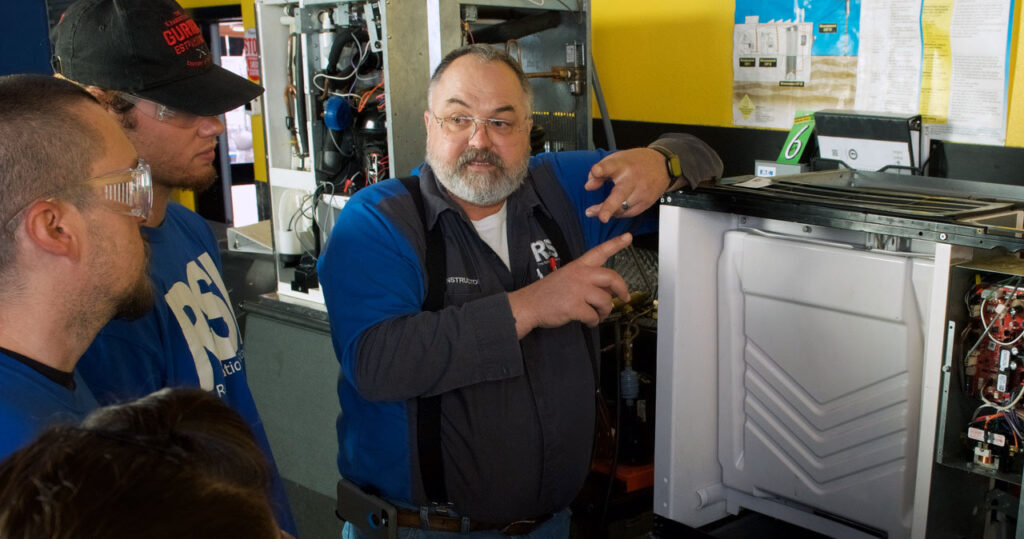
Both programs are hands-on from day one. RSI’s labs simulate real field conditions, so students work with the same equipment they’ll encounter on actual job sites rather than spending months on classroom theory before touching anything real.
HVAC/Refrigeration Technologies program covers:
- The program curriculum covers refrigeration systems, solar, motors, lighting, and ductwork, preparing students for multiple job types rather than a single specialty
- Electrical troubleshooting using RSI’s E-STAR Trainer, equipment developed to build field-level diagnostic skills
- Preparation to sit for the EPA Section 608 certification exam before graduation
Electrical Technologies program covers:
- The program curriculum covers residential and commercial wiring, motor and lighting systems, VDV (voice, data, and video) cabling, and NEC standards
- Photovoltaic (solar) systems and distribution technologies
- Foundational skills for entry-level roles across residential, commercial, and industrial settings
Graduates of both programs leave with a diploma and the skills for entry-level work in their field.
Scheduling and enrollment:
- Flexible class schedules span morning, afternoon, evening, and weekend options
- Start dates are rolling, not once a year
- Financial aid options include grants and scholarships for students who qualify
- RSI has high school resources for students and parents who are still evaluating, not ready to enroll
What the Phoenix Job Market Looks Like for New Trade Grads
Phoenix is a strong market to start a trades career right now, and the reasons are specific to Arizona’s current growth trajectory.
- Construction worker demand in Arizona is projected to rise 30% by 2030.
- Arizona is projected to add 37,000 construction jobs by 2031 per the Arizona Office of Economic Opportunity.
- Phoenix is the top US growth market for manufacturing construction, recording 14 major manufacturing announcements between 2020 and 2023, more than any other metro in the country.
- Phoenix ranks 5th nationally for data center market size, having grown 61.6% since 2015. Every facility requires ongoing HVAC maintenance and electrical work, and the sector is still expanding.
- HVAC employment in the Phoenix metro is projected to grow 31% through 2030.
- A significant share of projected annual openings comes from experienced technicians retiring, creating entry points at every level, not just the top.
Arizona’s climate creates sustained HVAC demand that most northern states don’t see. Summer drives emergency service calls and pre-season installs, while commercial refrigeration, data center cooling, and manufacturing keep demand consistent through the rest of the year.
Questions Worth Asking Before Any Decision
A trades career path fits some students well and others less so. These questions help clarify fit before any commitment gets made.
- Do you want to work on physical systems with your hands?
- Are you comfortable in a physically active job with varied environments?
- Do you want to be earning full-time within a year of graduation?
- Do you have a specific career goal that requires a four-year degree to enter, such as medicine, engineering, or law?
- Do you want a job where the result of your work is visible and concrete at the end of each day?
Students who lean toward hands-on problem solving, want to skip years of general education before doing anything field-relevant, and want a clear line from training to employment tend to thrive in trades programs. No prior hands-on experience is required to enroll. That is what the training is designed to provide.
Trades and other paths are not mutually exclusive. Some tradespeople pursue additional credentials later in their careers, sometimes with employer support. A seven-month program does not permanently close other doors.
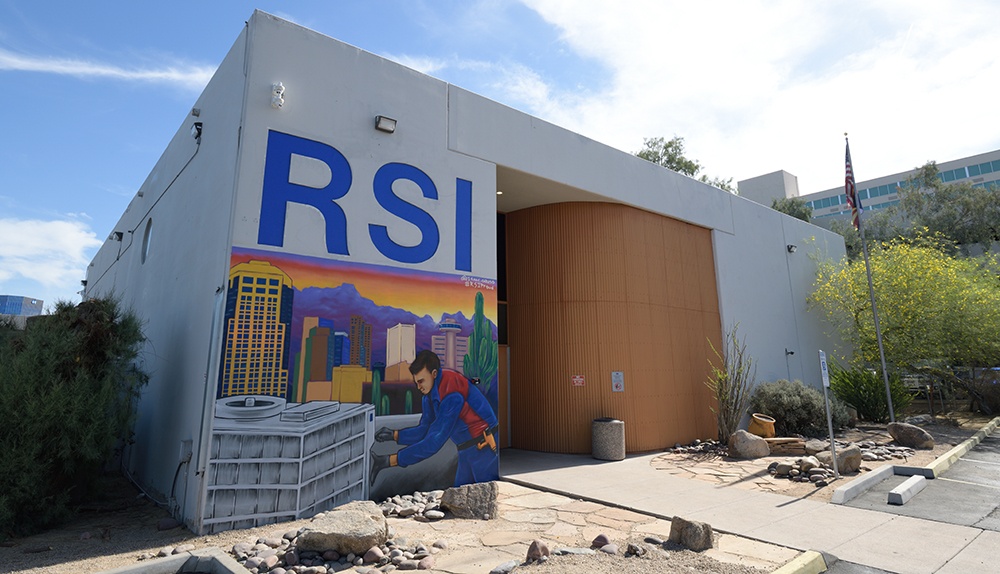
For students still weighing options, RSI’s high school resources require no enrollment commitment. A campus tour lets students see the training environment before deciding anything.
The next step is a conversation with someone who can answer specifics. Schedule a tour or request more information to get details on programs, start dates, and financial aid.